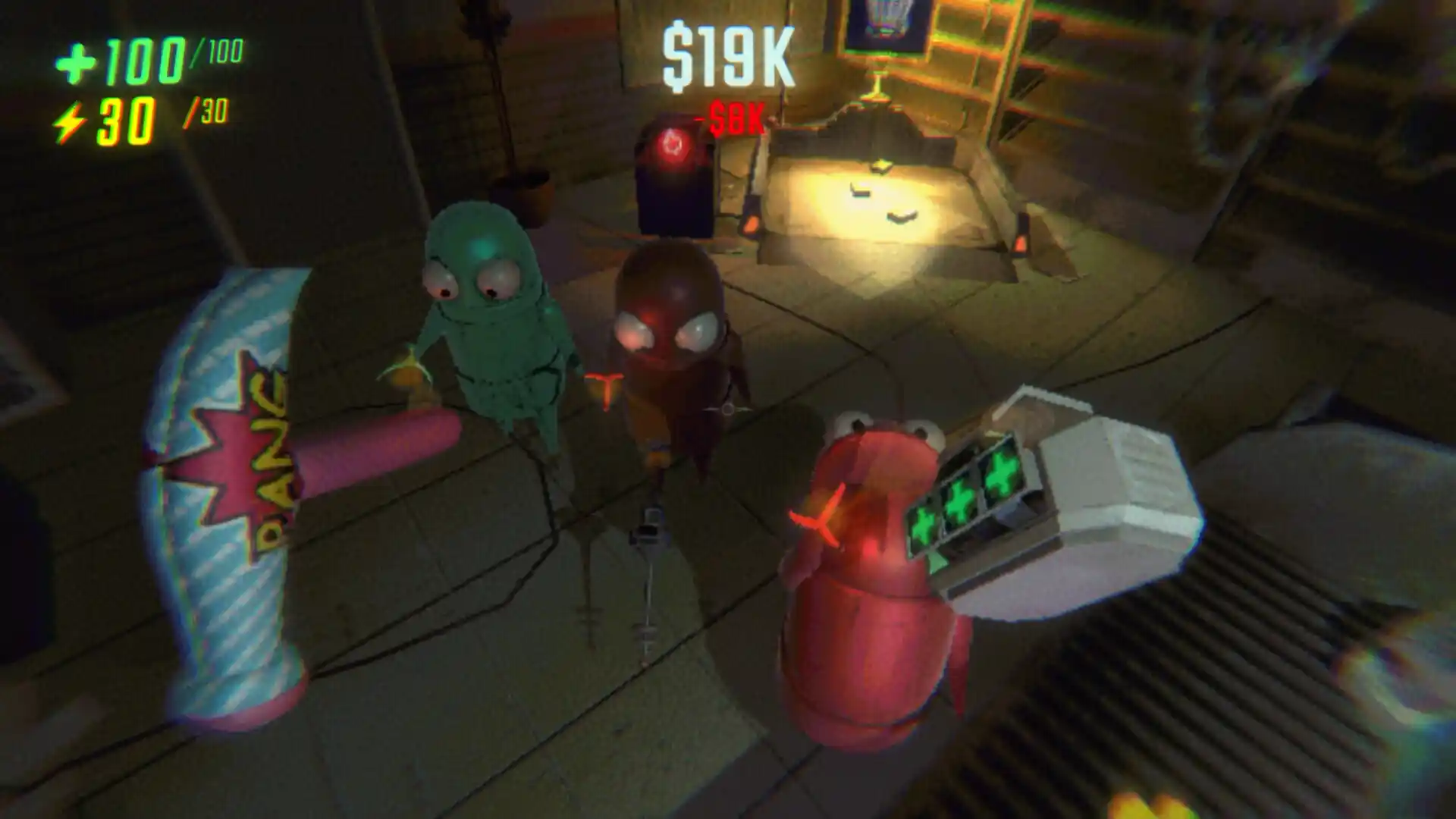
The three best-selling new games on Steam in 2025, by unit volume, were all indie titles priced under $20. R.E.P.O. moved 18.4 million copies. PEAK sold 15.7 million. Schedule I hit 8 million. Combined, 42 million units from three games made by small teams, none of which had a marketing budget you’d notice.
Meanwhile, Monster Hunter Wilds, Capcom’s tentpole release, $70 price tag, years of hype, shipped 6.1 million units on Steam and landed a 49% review score. Below the “Mixed” threshold. For a Monster Hunter game.
And yet the games industry spent most of 2025 asking the wrong question: can AI-built games compete with AAA?
The answer doesn’t matter. Because AAA is no longer the relevant frame of reference for anyone building games today. Not as competition. Not as aspiration. Not as a benchmark for quality. The more useful question is whether AAA is even playing the same game anymore and the evidence of 2025 suggests it isn’t.
AAA Is a Budget Category, Not a Quality Category
This distinction matters more than it sounds.
AAA doesn’t mean “great game.” It means a game that cost $100 million or more to make and requires mass market recoupment to justify its existence. That model creates specific, inescapable constraints: five-year development cycles, risk-averse design by committee, lowest-common-denominator targeting, and a structural dependency on platform holders who take 30% off the top before a single player boots up the game.
None of those constraints apply to indie game development in 2025. Not even slightly.
Asking whether an AI-native game can compete with a AAA title is like asking whether a food truck can make food as good as a Michelin-starred restaurant. The food truck isn’t trying to. It’s optimizing for speed, accessibility, personality, and a direct relationship with its customer that a Michelin restaurant will never have. The indie creator who builds a game for their community in a weekend is not competing with Naughty Dog. They’re doing something Naughty Dog literally cannot do.
The Formula That Beat AAA — And Why It Works
The three games that dominated Steam in 2025 look different on the surface. One is a horror extraction game. One is a mountain climbing simulator. One is a drug empire management sim. But they share a remarkably consistent set of mechanics underneath, and understanding them matters — because this formula is the clearest possible evidence of what players actually want right now.
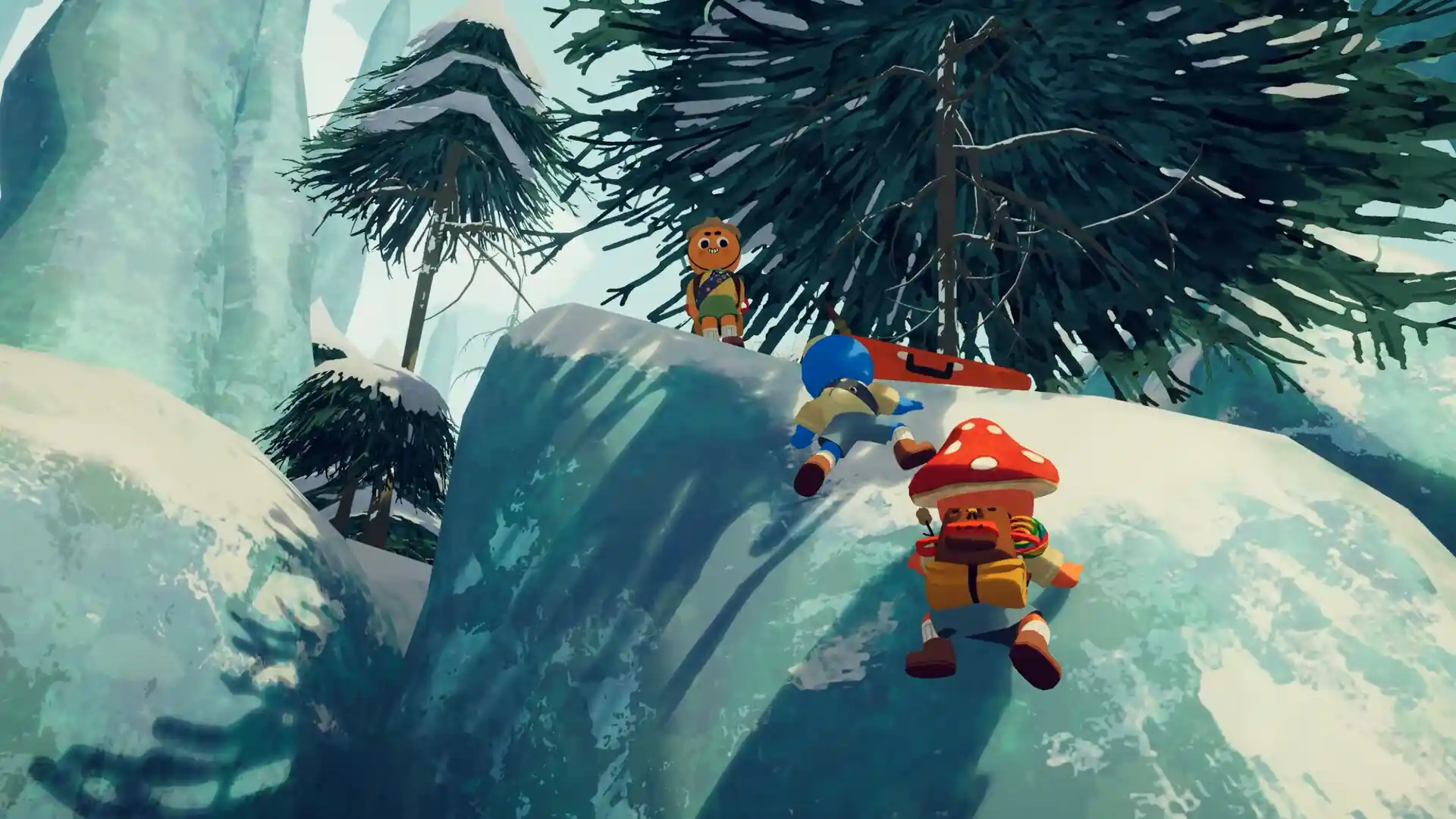
Physics-based interactions are the first pillar, not as a gimmick but as the primary source of comedy and chaos. In R.E.P.O., a grand piano careens down a staircase and kills two teammates. In PEAK, someone falls asleep from a sugar crash mid-climb and slides off a cliff face. The physics don’t just create gameplay. They create clips.
Proximity voice chat is the single most important mechanic in this formula. When you can only hear teammates nearby, separation becomes terrifying. Screams fade in the distance. A teammate’s voice cuts out mid-sentence as something kills them. One Steam review of Lethal Company, the 2023 game that codified this mechanic for the current generation, captured it perfectly: “My friend was slowly being killed in a room and all I could do was listen to his horrified screams over the radio. Anyways, we met quota. 10/10.”
Procedural generation with daily resets means nothing is ever the same twice. PEAK changes its mountain every 24 hours. Every session produces new stories, and new clips.
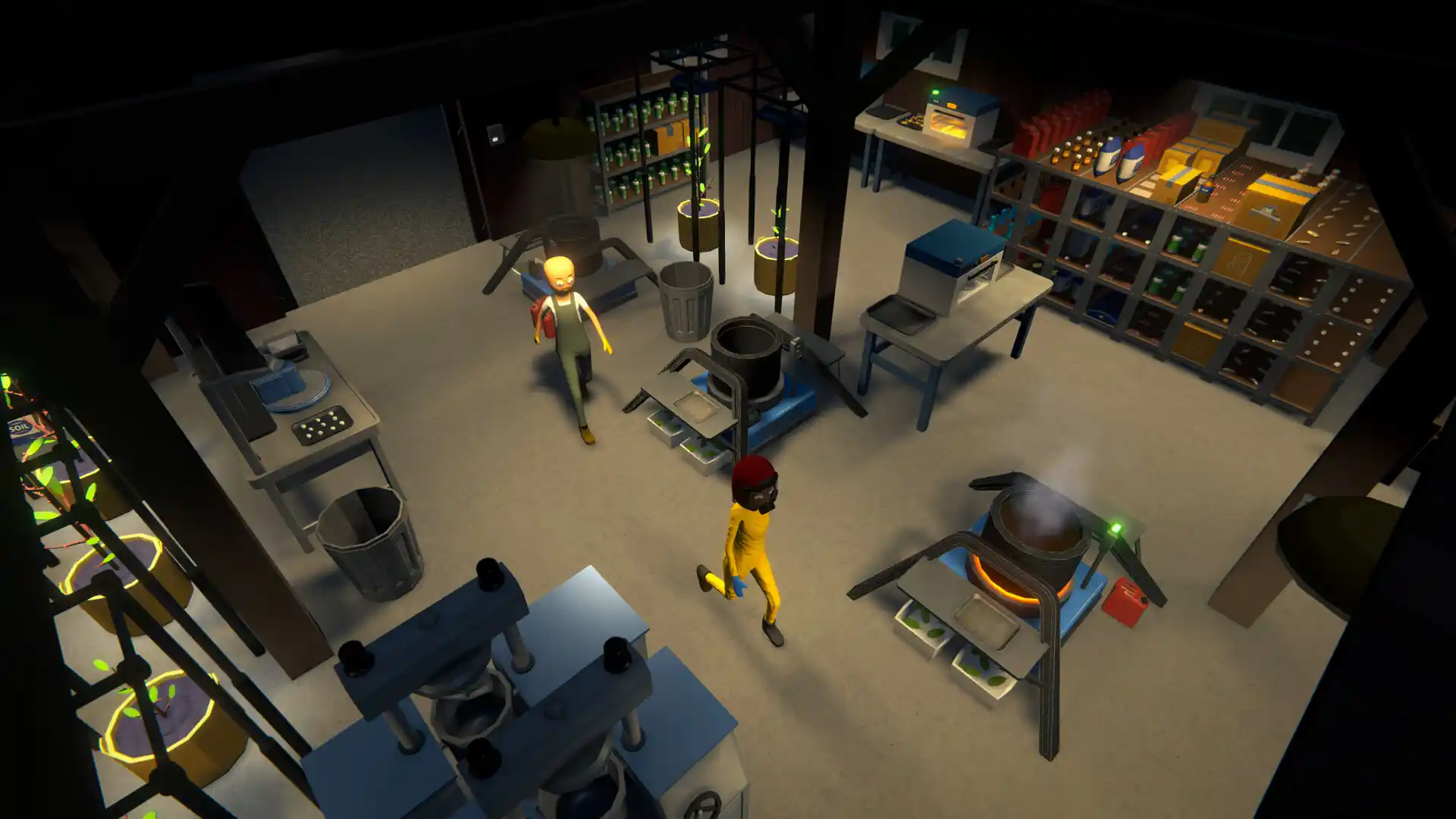
Early Access community building at under $20. Schedule I launched at $20 in March 2025 and hit 414,000 concurrent players, more than GTA V at the same moment, within a week.
Streamability as a mechanic. These games don’t just happen to produce good clips. They’re structurally engineered to. Short sessions. Shared suffering. Unexpected betrayal. The #lethalcompany hashtag hit 2.4 billion TikTok views. PEAK broke Twitch records. Content creation isn’t adjacent to the game loop. It is the game loop.
The genre has a name now: friendslop. It started as dismissive slang for cheap, simple multiplayer games, and is now being worn as a badge of honor by the developers who built it. Aggro Crab’s Nick Kaman, co-creator of PEAK, said it plainly: “There’s a real desire to connect and hang out in online worlds, and friendslop games put that at the front and center of the experience. These are games that emphasize teamwork and communication, as opposed to just testing your individual skill in a group setting.”
A AAA studio cannot build a friendslop game. Not because they lack talent. Because the formula requires things the AAA model structurally prevents: a six-week development cycle, an $8 price point, a willingness to ship something unpolished and let the community define what it becomes.
How We Got Here
The friendslop formula didn’t appear in 2025. It has a clear lineage, and following it matters because the same underlying human need has driven every iteration.
It starts with Mafia and Werewolf, party games played in living rooms with cards, where a hidden group of killers eliminates innocents while everyone argues about who’s lying. The psychological DNA of every game in this lineage lives here: information asymmetry, social pressure, the thrill of deception, and the memory of that one round where everything went perfectly wrong.
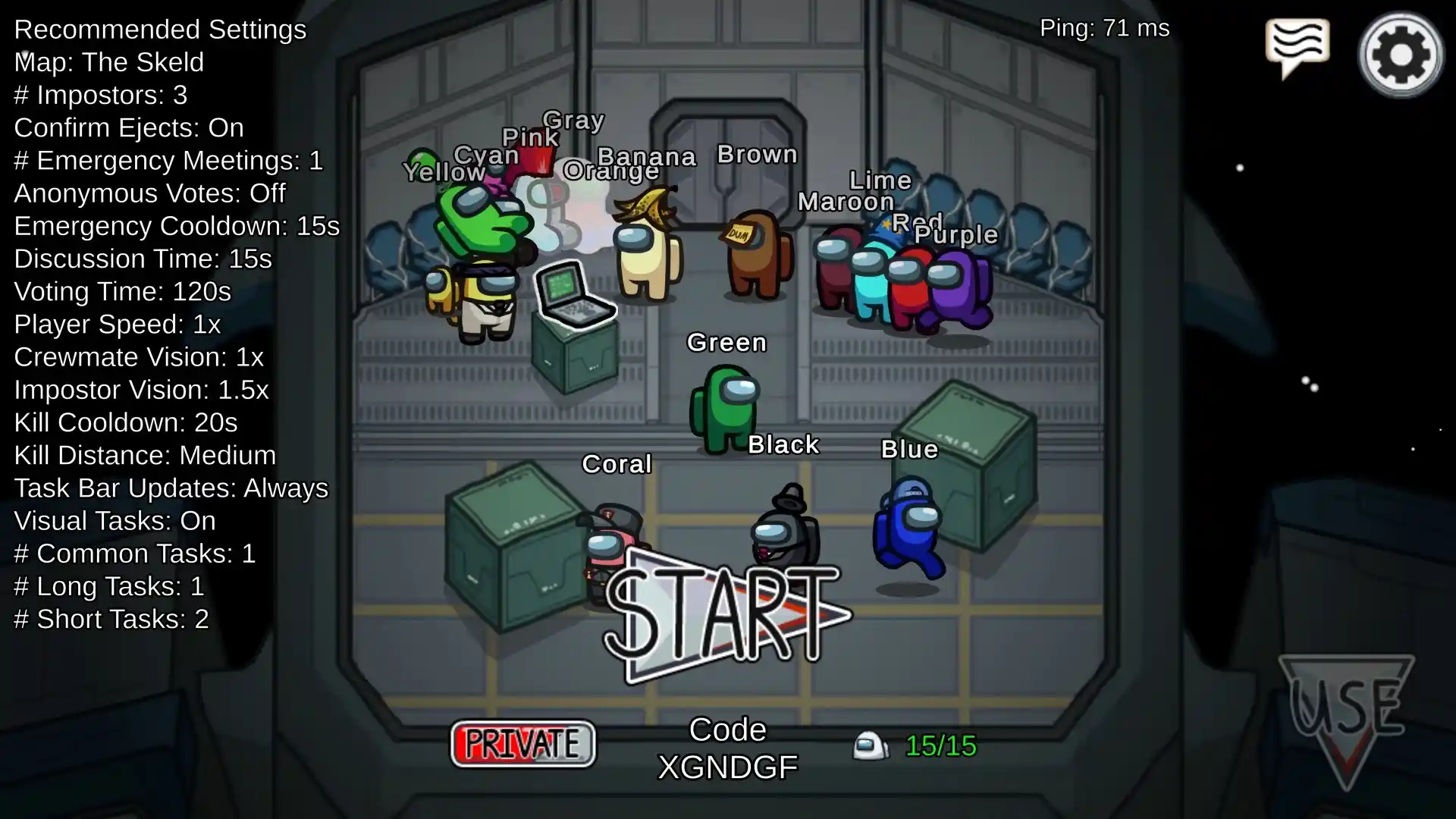
Among Us (2018) is the breakthrough that proved the formula could reach mass culture.
Released in 2018 by a three-person studio in Redmond, Washington, it was ignored for two years. Then in July 2020, Twitch streamer Sodapoppin played it on stream and the clip spread. By September that year, 4 billion hours of Among Us content had been watched on YouTube in a single month. By November, it had 500 million monthly active players across all platforms. Downloads surged 661% month-over-month in August 2020. It didn’t scale through paid marketing. It scaled because the product was perfect for streaming: short rounds, social tension, funny accusations, betrayal, and endless clip potential.
Among Us also benefited from COVID lockdowns, millions of people isolated at home, desperate for social connection. The game became a substitute for physical presence. That social need didn’t go away when lockdowns ended. It evolved.
Phasmophobia (2020) was the first game to translate that energy into co-op video games at real scale. A ghost hunting game built by a solo developer, it proved that proximity voice chat could be a primary mechanic rather than an accessory. You and friends enter haunted buildings with equipment, try to identify the ghost type, hope you don’t die. It peaked at 112,000 concurrent players and established the template: small teams, dark environments, voice chat as a terror amplifier. It’s still running in 2026.
Lethal Company (2023) codified the modern formula. Made by a single developer, Zeekerss, formerly a Roblox game creator, released in Early Access at $9.99 in October 2023. Within its first week it had 100,000 concurrent players, topping Steam’s Global Top Seller list and beating Resident Evil 4 and Baldur’s Gate 3 as the highest-rated new game of the year. The concept was brutally simple: work for a faceless corporation, scavenge abandoned moons for scrap, meet quota or die. Lethal Company didn’t just popularize proximity chat. It made proximity chat table stakes for an entire genre. Every game that followed either had it or was asked why it didn’t.
By 2024 and 2025, the formula was producing itself. PEAK co-creator Nick Kaman has described watching Landfall Games build Content Warning in roughly six weeks while his own studio spent three years on Another Crab’s Treasure, and feeling “raging jealousy.” That jealousy became PEAK, a game jam project turned into one of the biggest games of 2025. Successful friendslop games were now inspiring their creators to make more friendslop games, faster, cheaper, and with shorter feedback loops between idea and player.
The Comparison Trap
Every time a new AI game platform launches, someone asks: “But can it make a game as good as an AAA title?”
This is the wrong question, and asking it reveals a fundamental misunderstanding of what is actually happening.
Solo developer TVGS made $151 million on Steam in 2025 with Schedule I. Nobody called it a AAA game. Nobody needed to. PEAK, a game jam project, sold 10 million copies and generated $87 million at $7.99. Stardew Valley, one person, 4.5 years, has sold 41 million copies. Buckshot Roulette, one developer, built in Godot, sold 8 million copies within a year of launch.
These games were not trying to be AAA. They were optimizing for something entirely different: a specific audience, a specific social experience, a price point that removes any friction from the decision to play. The game that cost $200 million to make and the game that cost $200 are not in the same market. They are reaching different people, in different ways, for different reasons.
The sooner anyone building AI-native games internalizes this, the sooner they can stop apologizing for what they’re making.
The Hard Numbers
Indie games accounted for 25% of Steam’s total revenue in 2025, roughly $4.5 billion out of $17.7 billion, which was itself 15% higher than 2024. The top five new indie releases alone — Schedule I, R.E.P.O., PEAK, Hollow Knight: Silksong, Escape from Duckov, generated over $500 million combined. Five games. Most of them made by teams smaller than a AAA studio’s QA department, accounting for 3% of Steam’s entire yearly revenue.
Meanwhile, 83% of gaming executives identify AI as a top priority for their three-year strategy. Most of them are talking about using it to cut costs in existing AAA pipelines, not to rethink what games are or who makes them.
That is the kind of response that happens when an industry is optimizing for the wrong benchmark.
Will Friendslop Last? And What Comes After?
The underlying need driving friendslop is not a trend. Social connection, shared chaos, the desire to play something with friends that creates stories worth telling — these are permanent human behaviors that games satisfy in a way no other medium does. Among Us proved that a $5 game with two-dimensional cartoon graphics could reach 500 million monthly players if the social loop was right. That observation doesn’t expire.
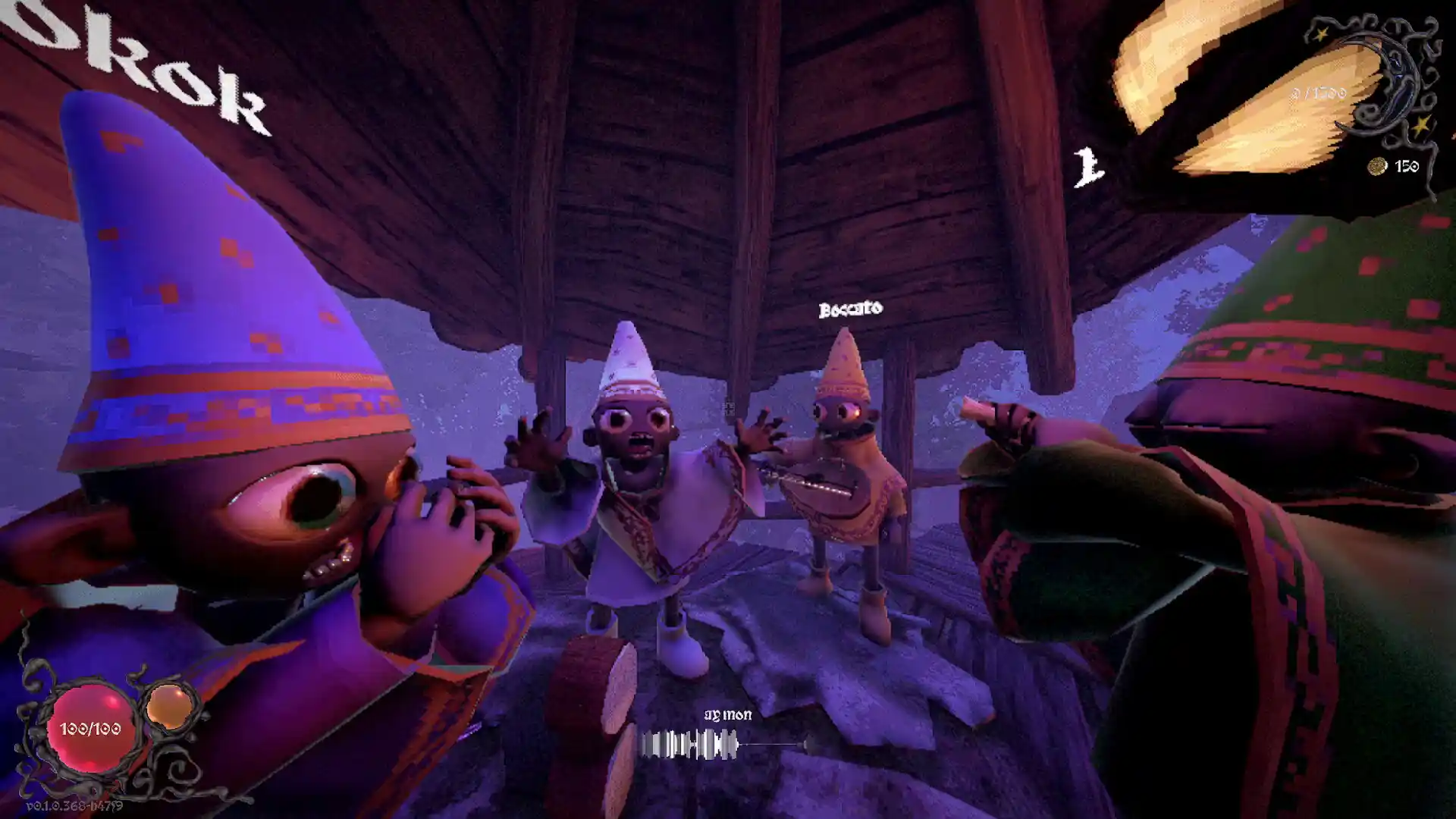
The 2026 evidence supports continuation. Yapyap, a magic-themed co-op horror game described as “R.E.P.O. in reverse,” sold 500,000 copies in its first week in February 2026. Big Walk, the next game from the creators of Untitled Goose Game, is explicitly positioned in the same space. PEAK’s own co-developer Landfall launched Evil Landfall, a publishing arm specifically funding friendslop games. Its CEO is already fielding pitches that say “This is like Peak, please fund it.”
The Peak co-creator’s public message to indie developers in March 2026 was direct: “Please, make friendslop game, before the fad dies.”
That last phrase is the tell. The person who did the most to cement this category is already hedging. There are structural reasons to think the formula will wear out, or at least diversify.
The first risk is saturation. The same market dynamics that flooded Steam with 20,000 games in 2025 will flood it with friendslop games in 2026 and 2027. When every indie studio is making a physics-based co-op horror game with proximity chat and procedural maps, the formula stops being a differentiator and becomes a commodity. The games that break through next will find the thing that makes them feel different within that structure or abandon it entirely.
The second risk is platform lock. PEAK, R.E.P.O., and Lethal Company are all PC-only. Console versions are coming but haven’t shipped. Mobile is essentially untouched. The next breakthrough friendslop game may be the one that solves cross-platform co-op, bringing proximity chat and physics chaos to the living room or the phone in your pocket. That’s a different design and distribution problem than building for Steam.
The third signal, and the most relevant for this publication’s audience, is that the next formula will be shaped by AI game creation tools.
The reason friendslop succeeded is that it’s mechanically simple enough for small teams or solo developers to build, but socially rich enough to feel infinitely replayable. AI game creation platforms are now eliminating even the small-team requirement. If a solo creator can build a physics-based co-op game with proximity chat in a weekend using tools that didn’t exist two years ago, the barrier to entry collapses further. The next wave of breakout games will come from people who aren’t professional developers at all. They’ll come from streamers, community managers, and content creators who know exactly what their audience wants to play together, and can now build it.
The formula evolves when the tools evolve. Among Us came from a three-person studio. Lethal Company came from one developer who used to make Roblox games. Schedule I came from one Australian. The trend toward smaller and smaller teams making bigger and bigger hits is not reversing. It’s accelerating.
The Case for Ignoring AAA Entirely
AAA games are often spectacular, and the craft that goes into them is real. But as a strategic reference point for anyone building AI-native games, AAA is simply not useful. The tools, the economics, the timelines, the distribution, the audience relationship, the creative process, none of it maps.
Building an AI-native game while benchmarking against Assassin’s Creed is like writing a newsletter while benchmarking against the New York Times print edition. Technically the same medium. Completely different game.
The most interesting thing AAA studios could do right now is learn from the friendslop wave, not the other way around. The ones that survive the next decade will be the ones that figured out how to ship faster, build community earlier, price more accessibly, and stop treating a five-year development cycle as evidence of seriousness.
The actual story of 2025’s indie year is not that small studios beat AAA. It’s that the category of “small studio” is itself dissolving and what’s replacing it doesn’t have a name yet.
It will soon. And it will be built on an AI game platform. Probably in a weekend. Probably by someone who doesn’t think of themselves as a game developer at all.
Sources
- Steam in 2025: The Year Indie Games Ate the Industry Alive — SteamData Research / Medium (Feb 2026)
- Indie games accounted for 25% of Steam’s revenue in 2025 — Notebookcheck / Alinea Analytics (Dec 2025)
- Indie projects generated a quarter of total game revenue on Steam by end of 2025 — Game World Observer (Dec 2025)
- How Much Do Indie Games Actually Make on Steam? — Ziva (Mar 2026)
- Lethal Company — Wikipedia
- Among Us — Wikipedia
- The 10-Year Journey Behind Lethal Company’s Success — Push to Talk (Oct 2024)
- Co-op horror game Lethal Company hits over 100k concurrent players on Steam — Destructoid (Nov 2023)
- Lethal Company becomes top-rated game of 2023 on Steam — Game World Observer (Nov 2023)
- Among Us Revenue and Usage Statistics (2026) — Business of Apps
- “Make friendslop games before the fad dies”: Peak co-creator encourages indie devs — GamesRadar (Mar 2026)
- Peak came about after a bet between Content Warning and Another Crab’s Treasure leads — GamesRadar (Mar 2026)
- Peak’s success was a surprise because the co-op romp didn’t launch with “much of what we thought was required to make a hit” — GamesRadar (Jan 2026)
- Peak is $8 because the devs wanted you to see a $5 price tag — GamesRadar (Jan 2026)