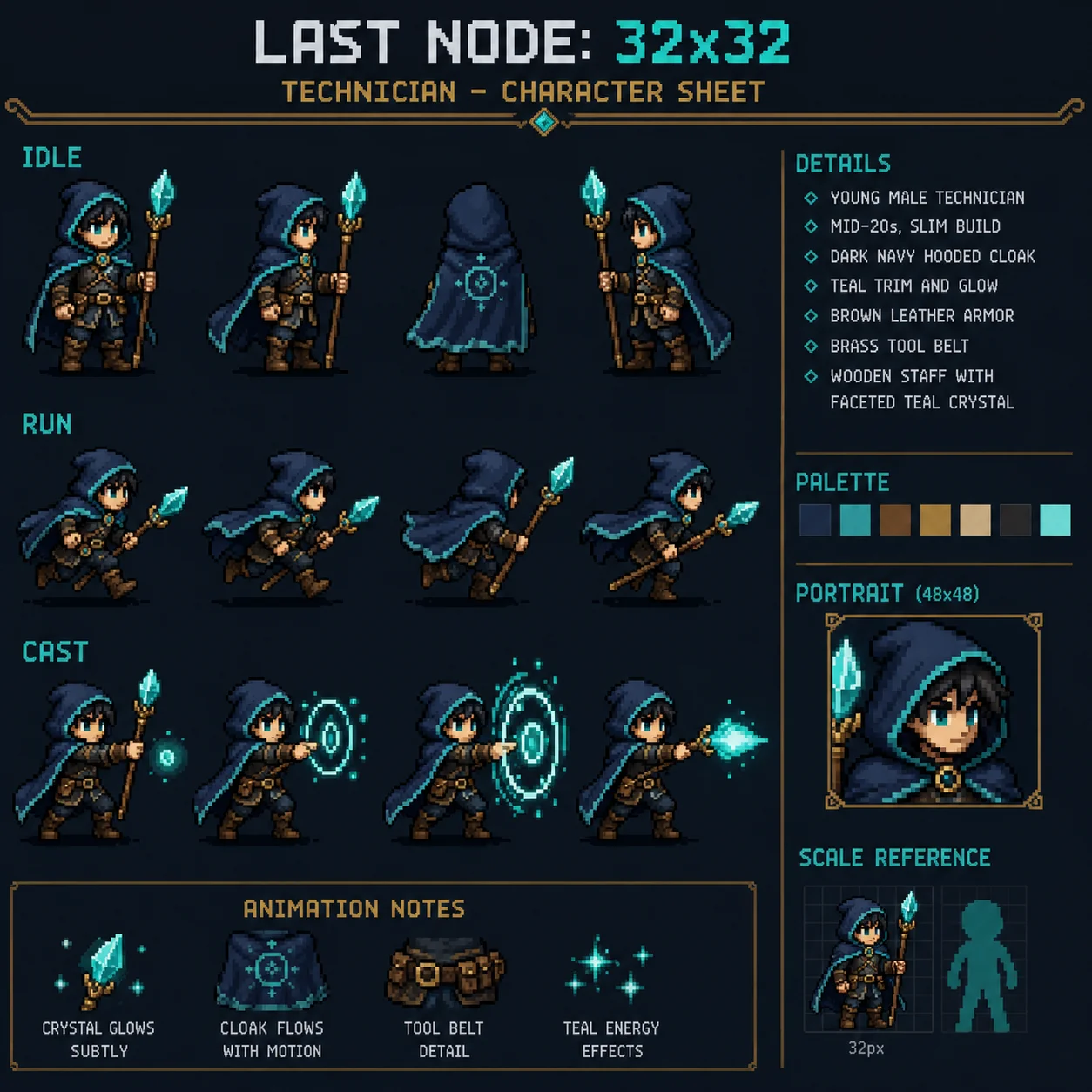
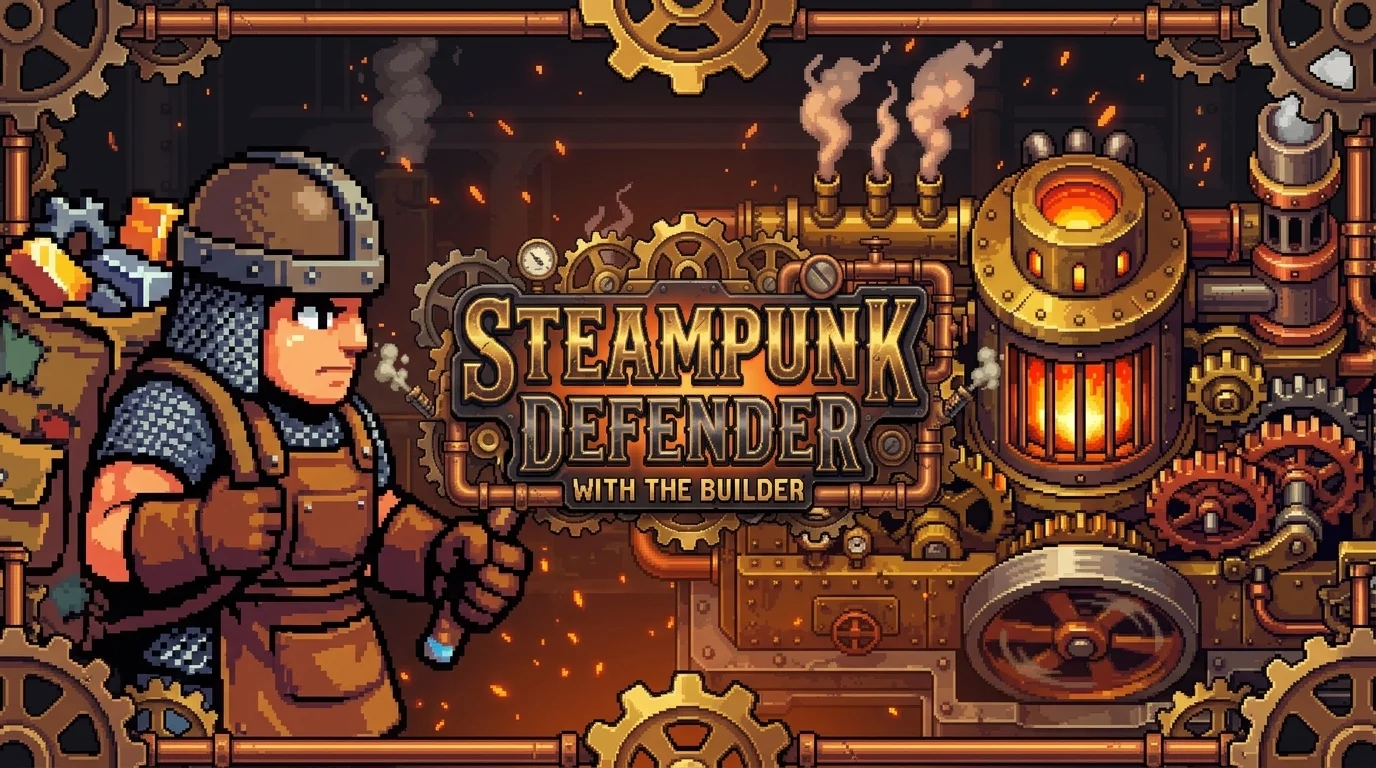
Screenshots
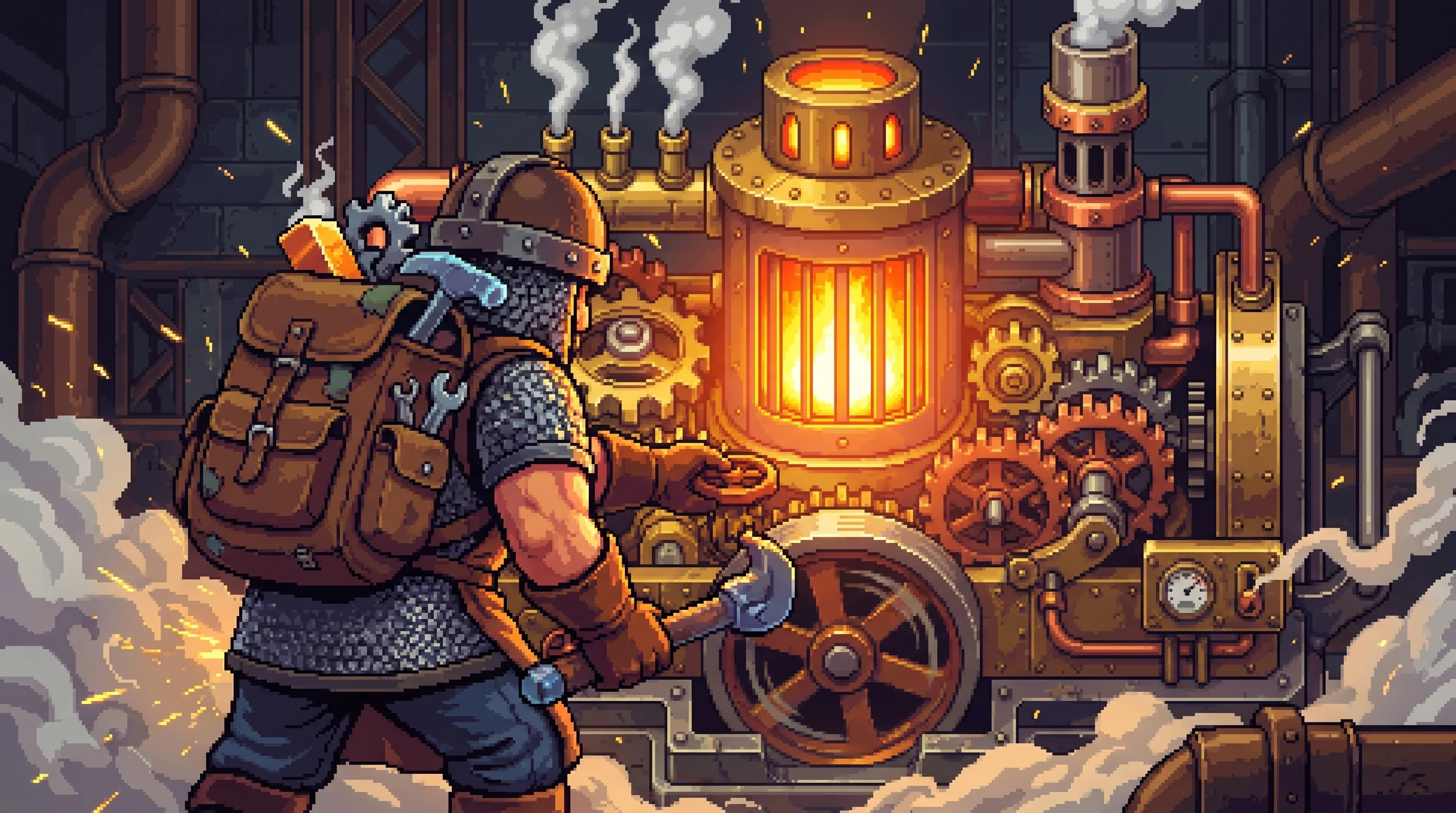
Gameplay Mechanics
The core loop revolves around an addictive 3-phase cycle: Preparation, Defense, and Upgrade. During the 15-second Prep phase, players must analyze the grid, repair the Central Generator, and strategically place defenses. In the Defense phase, enemies spawn from the edges (360º) in increasing numbers. The player must move frantically to repair structures under attack and survive. When the wave is cleared, the game pauses for the Upgrade phase, where an RNG system offers two buff cards, forcing tough decisions.
Controls:
-
Movement: WASD or Arrows.
-
Aim: Mouse.
-
Build Mode: Q key.
-
Build: Left Mouse Button.
-
Repair: E key.
Key Features
-
Tactical Grid Action: The entire game—movement, building, and collisions—was designed to fit inside a challenging 32x32 tile grid.
-
Smart Building System: A hologram preview shows where 2x2 towers can be placed, preventing players from building on blocked tiles.
-
Roguelite Upgrade System: Between waves, choose cards that boost player speed, improve healing power, grant repair kits, or provide the coveted Epic Item: a new Tower.
-
Pseudo-3D Towers (360º): Towers mathematically calculate enemy angles and swap between 77 perfectly drawn pixel-art frames to shoot homing projectiles, achieving a 3D rotation effect in a pure 2D environment.
-
Scaling Difficulty: Endless waves feature an aggressive enemy spawn formula. The longer you survive, the more chaotic it gets.
What makes your game stand out from others in its genre?
The main hook is the blend of extremely scarce resource management with real-time movement chaos. Unlike traditional Tower Defense games where you just watch, here you are a vulnerable engineer on the battlefield. The tiny, confined space of the map (32x32) creates a sense of claustrophobia. Furthermore, the Steampunk pixel art combined with strong “Game Juice” (screen shake, dynamic health bars, and smooth tower animations) delivers a highly polished and satisfying experience.
AI Tools Used
Google Gemini and Minds.
How AI was integrated into the development process
As a beginner Unity developer, I used Google Gemini as a direct “programming mentor”. The AI was instrumental in structuring the C# code architecture, helping to create the complex math behind the 360-degree tower aiming, the grid-snapping system for the mouse, and building a dynamic UI system purely through code without relying heavily on the Animator. Gemini also provided step-by-step guidance for debugging and optimizing the game’s wave manager.
Community
Ratings and reviews are public. Use the heart in the hero to like this game.