Most criticism of vibe-coded games isn’t really about quality. It’s about mortality. A game gets built in a weekend, goes viral for four or five days, and then the repository goes quiet. No patch notes, no roadmap, nobody home. That’s most of what people actually mean by gameslop: not that the games look bad, but that they’re disposable, built to catch one wave of attention and then abandoned the moment it passes.
These four games break that pattern twice over. All four are still in active development months after launch, with real patch notes, devlogs, and features that weren’t in the original release. But staying alive isn’t the only thing they share. None of them could have been assembled from a game-creator platform’s template library. A voice-scoring engine that grades your actual freestyle in real time. A puzzle mechanic built around letters collapsed into a single tangled glyph. An AI judge with an actual personality reacting to your drawing as you make it. A no-code platform doesn’t hand you any of that. It shows up when someone writes real, custom code, AI-assisted or not. Longevity is one axis these four sit on. Building something a platform couldn’t have handed them is the other.
ARTbitrator
Built with Claude
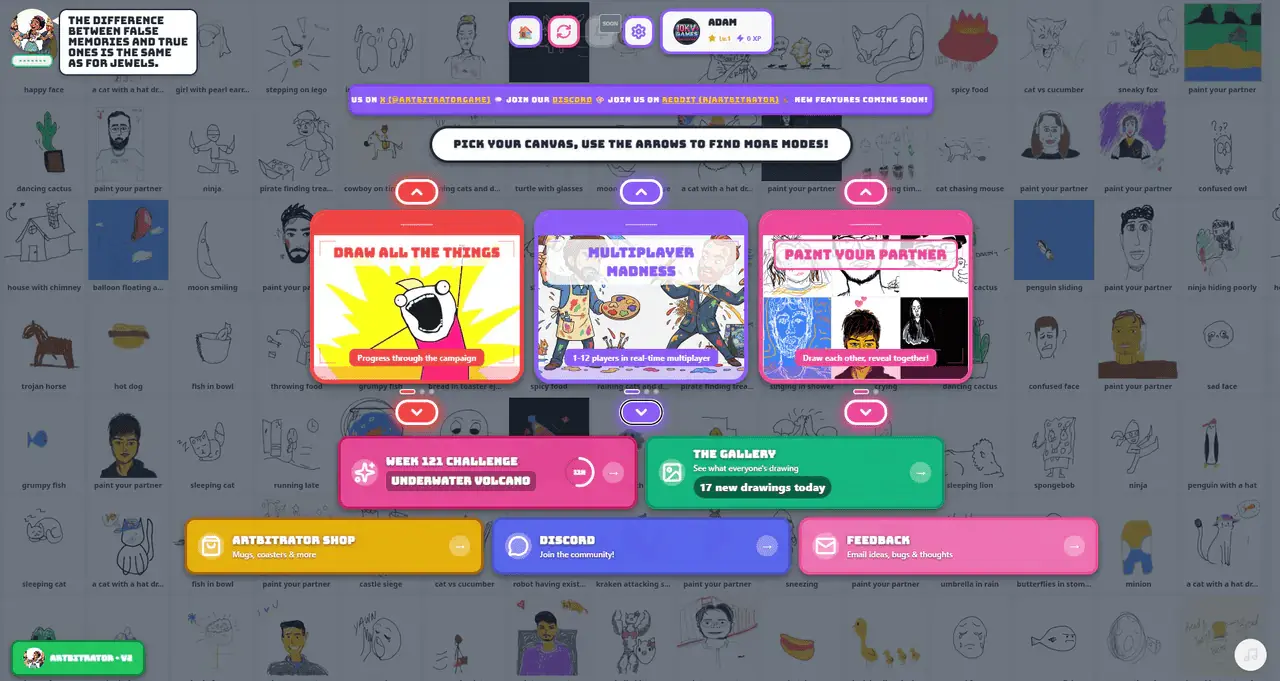
ARTbitrator doesn’t reinvent the drawing-game wheel. Quick-draw-and-guess is Pictionary with extra steps, and Skribbl and Gartic Phone already do the multiplayer version. What it actually changes is who’s judging and how many ways you can play it. An AI judge, voiced as Bob Ross, Picasso, or Dalí, reacts to your drawing in real time instead of a human silently guessing, and the same core loop now supports five different modes: competitive, collection, narrative, practice, plus a viral couples spinoff (Paint Your Partner) aimed at long-distance couples. The mechanic is old. The social surface area wrapped around it isn’t.
Play: artbitrator.com
Tetra Troopers
Built with Codex
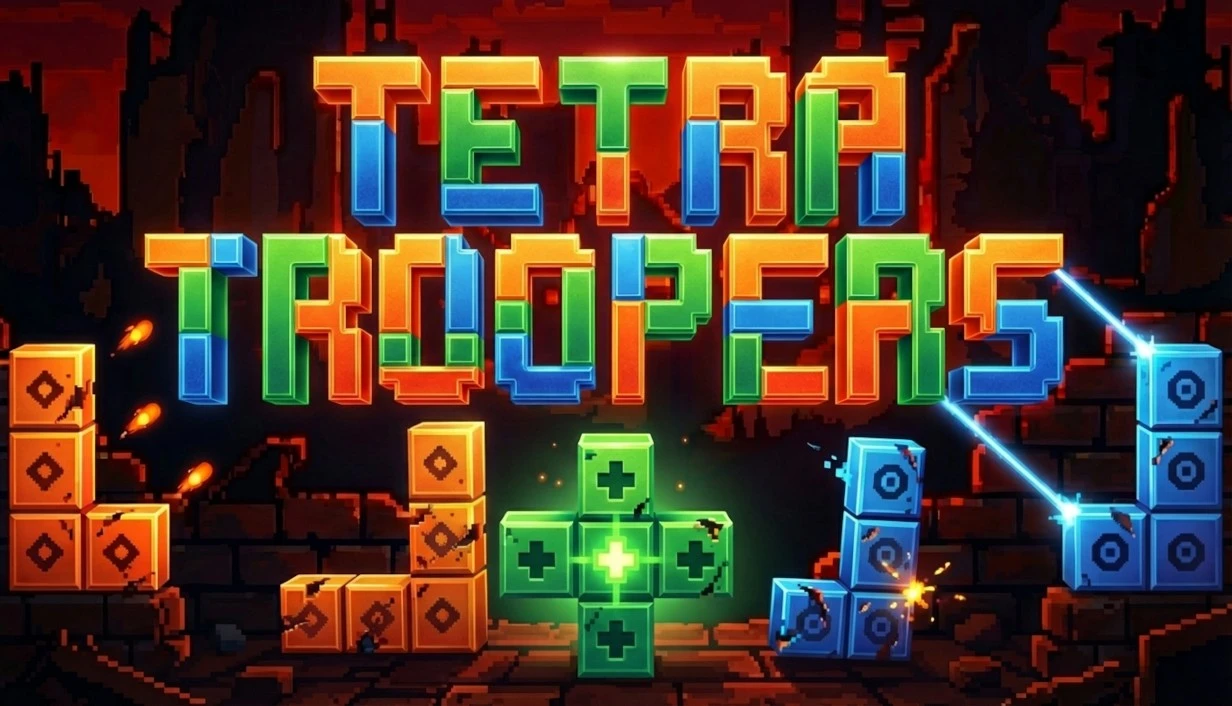
Tetra Troopers is what happens when someone refuses to pick a genre: the core loop is a Tetris riff where block-shaped squads get dropped onto an 8x12 grid with no gaps allowed, except the placement rule isn’t just fitting pieces together, it’s stacking them, since dropping one unit directly on top of another fuses them (a Medic landed on a Sniper doesn’t occupy the same tile, it becomes a different unit entirely, a hybrid veteran with both kits), and whatever survives that morning puzzle phase becomes the army that has to hold a persistent 60x60 home base once night falls and the tower-defense waves start auto-resolving.
Play: tetra-jet.vercel.app
Rap Battle
Built with Antigravity
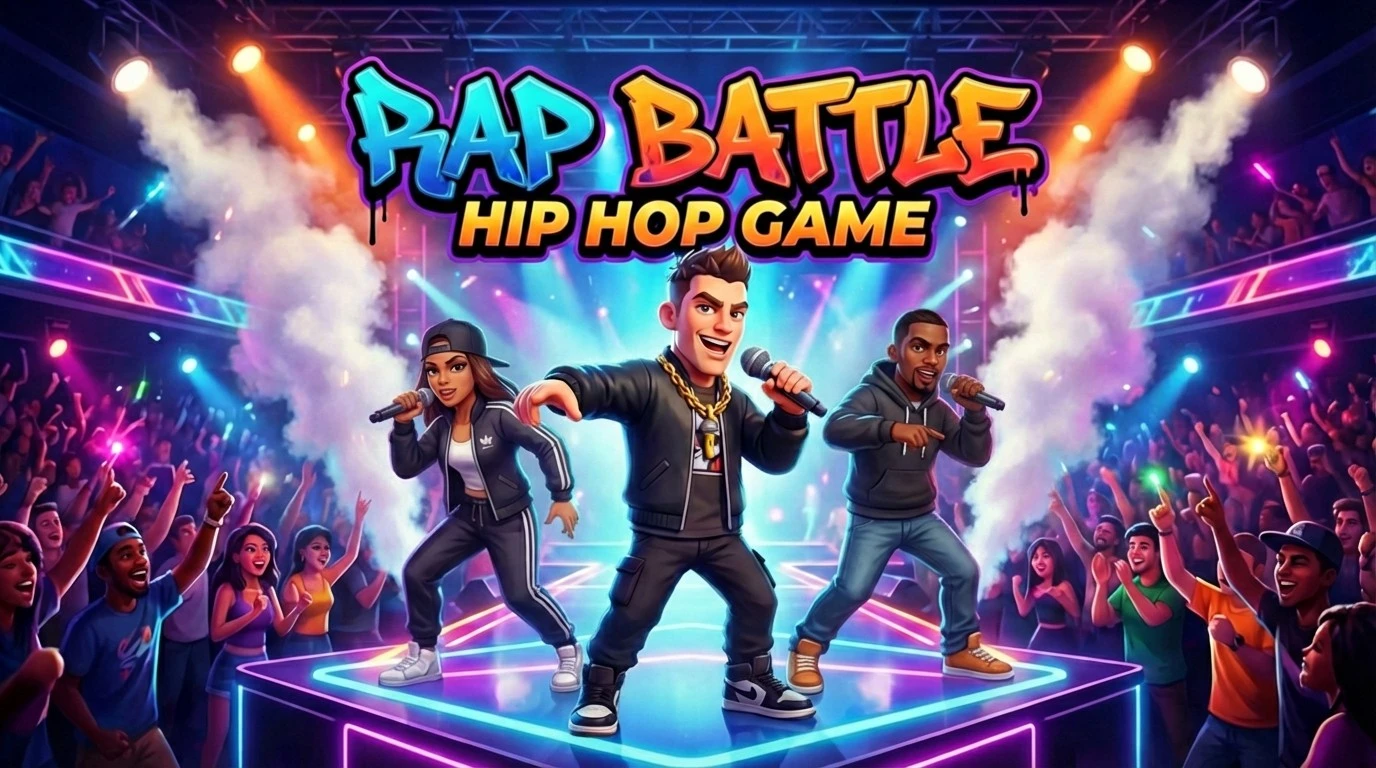
Rap Battle does something genuinely different from most AI music toys: it judges your actual voice. Instead of typing lyrics into a generator, you freestyle live over a beat through your microphone, and a real-time audio analysis engine scores beat sync, vocal energy, and flow consistency as you go. Most “AI rap” tools generate the performance for you. This one listens to yours and grades it.
Play: make-a-beat.com/rap-battle
Glyph
Built with Claude, Codex
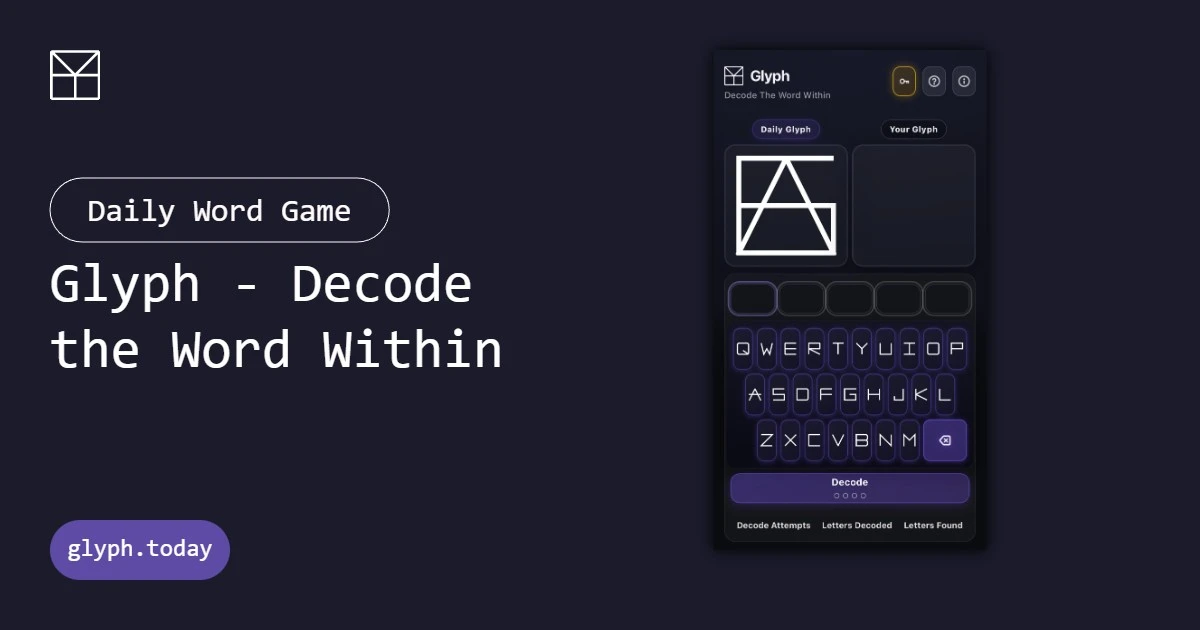
Glyph is the one with a genuinely new mechanic underneath the daily-puzzle formula. Instead of guessing letters into open slots like Wordle, you’re handed a word already collapsed into a single tangled glyph, its letters stacked and overlapping, and you work backward to figure out which letters are which. It also shipped a multiplayer layer that wasn’t in the original release: a build-your-own-glyph mode where you challenge a friend to decode a word you picked. Where the other three lean on AI or social features wrapped around a familiar core loop, Glyph’s core loop itself is the new part.
Play:
- Web: glyph.today
- Android: Google Play
- iOS: App Store