Every vibe-coded game origin story loops back to the same three hours in February 2025, when Pieter Levels opened Cursor, typed something close to “make a 3D flying game in the browser,” and had a flyable prototype before lunch. Seventeen days later, fly.pieter.com was pulling in enough from floating sponsor logos and a $29.99 F-16 upgrade to hit $1M in annualized revenue. Elon Musk retweeted it to 200 million followers around day three. What barely anyone brings up is what kind of game it actually was. It was a real-time multiplayer flight sim, strangers spawning into the same sky, finding each other, and shooting each other down. The first vibe-coded game anyone actually paid attention to was already an MMO.
That’s the thread worth pulling here. If a persistent multiplayer world was possible in three hours in early 2025, what does one look like now that someone’s actually taken the time to build one properly with more advanced AI models?
These three answer that differently, and a fourth shows up at the end because it’s too ambitious to leave out.
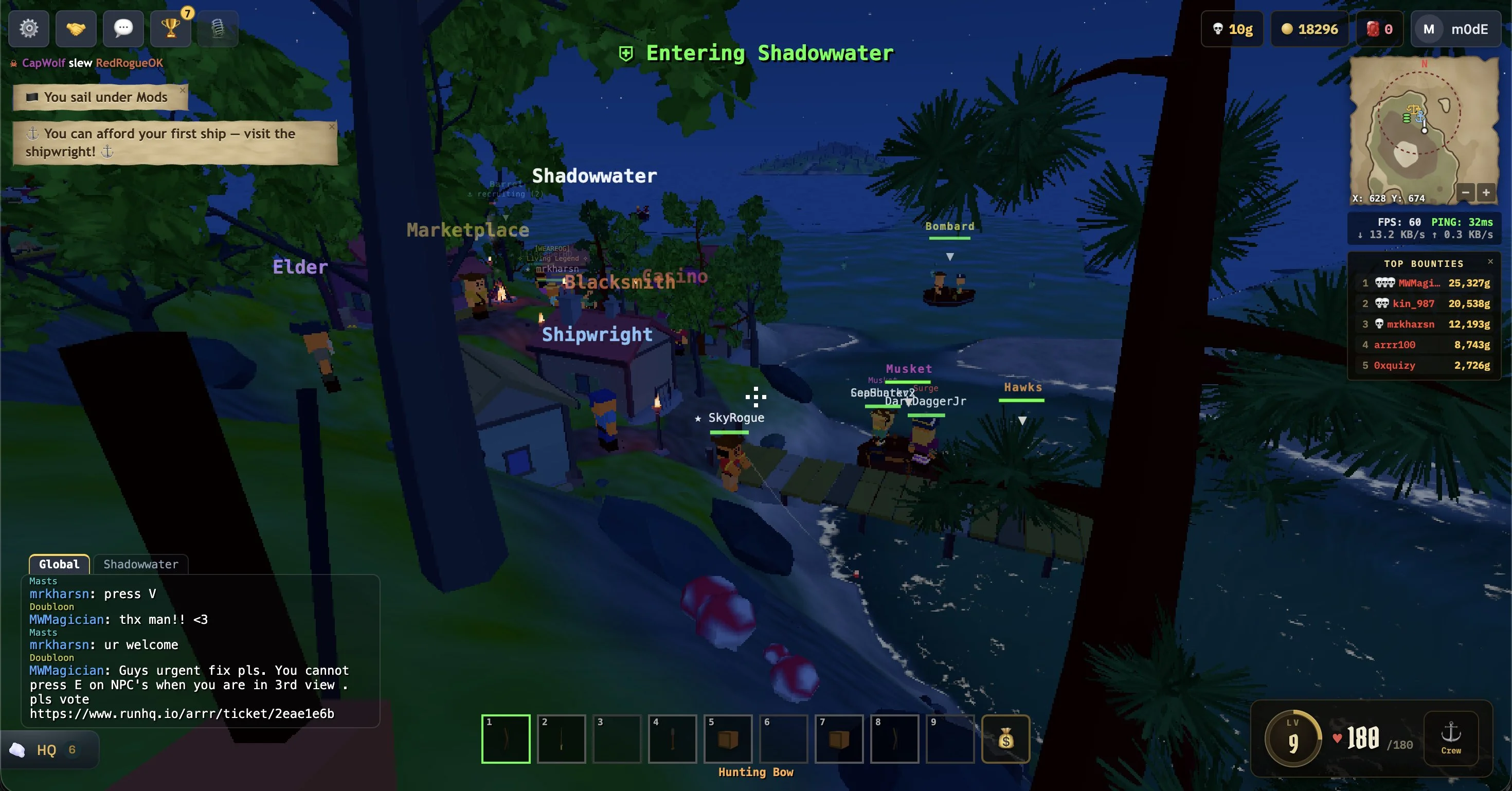
ARRR
arrr.fun swaps the lone developer for a crowd. Log in and you’re sailing a real 3D ocean within seconds: ship combat, a bounty board, a twelve-piece treasure hunt where a PvP kill has a real chance of stripping a rival of what they’ve found, a live item marketplace. It’s built on modd.io, a browser game engine whose founder, m0dE, also runs the project, and it’s coordinated through RunHQ, a job board where contributors pick up coding tasks and get paid in in-game points for whatever they ship. The pirate MMO everyone plays is also, quietly, an open call for whoever wants to keep building it.
Play at arrr.fun
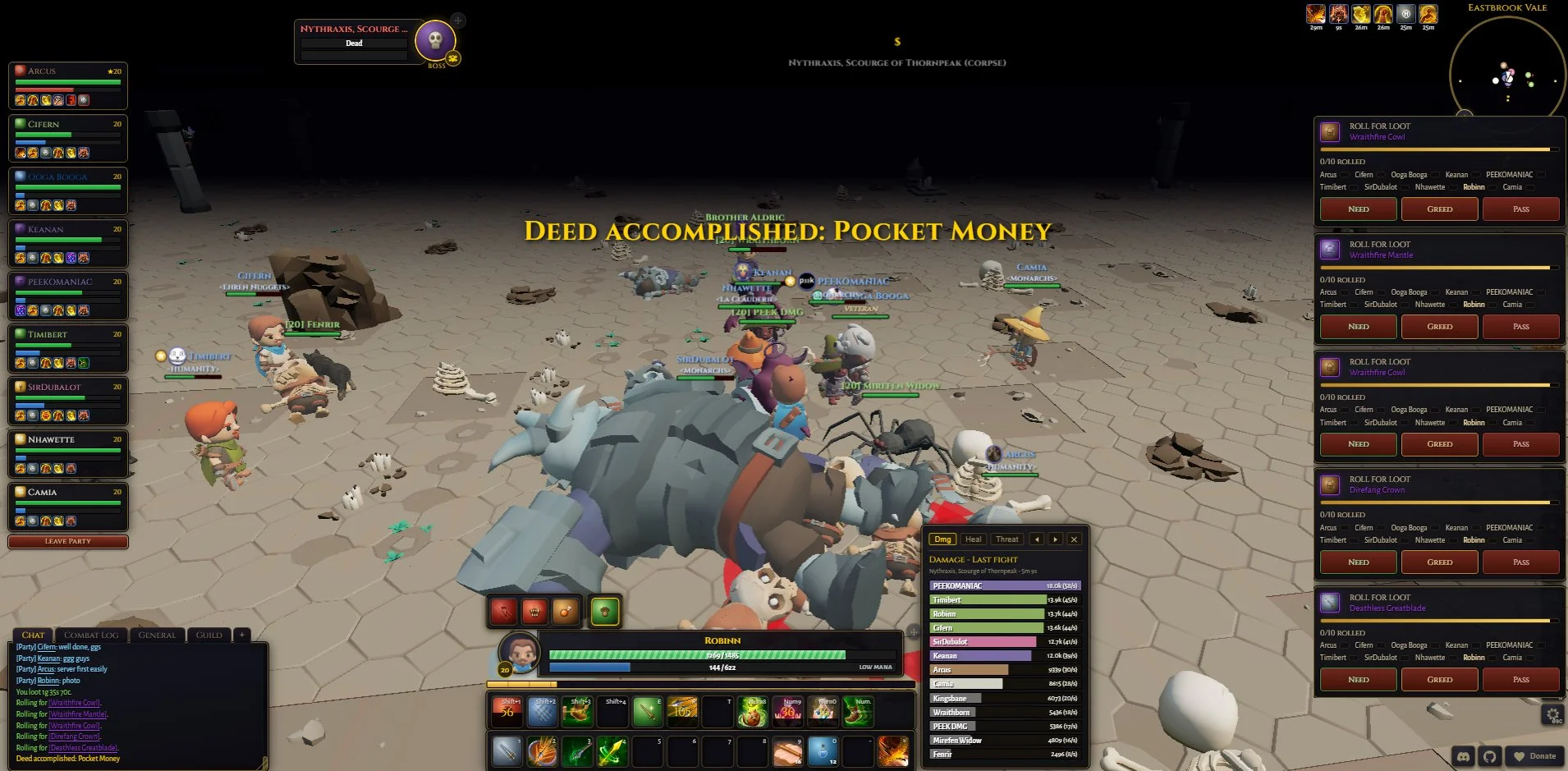
World of ClaudeCraft
This is the one that actually earns the genre label without an asterisk. Nine playable classes, a real talent tree, three connected zones, roughly 80 quests, all running as one persistent shared world across a browser client, a self-hosted server, and even a headless version built for training AI agents to play it. A small studio called Levy Street built it over a single 48-hour weekend and put out an actual press release when it shipped. It’s fully open source, has pulled over a thousand GitHub stars and around 300 forks, and got a public nod from a16z partner Justine Moore. Almost nothing in it is a shipped asset. The towns, monsters, and sound all generate at runtime from the same fixed world seed, so every player’s Eastbrook Vale is the same place.
Play at worldofclaudecraft.com
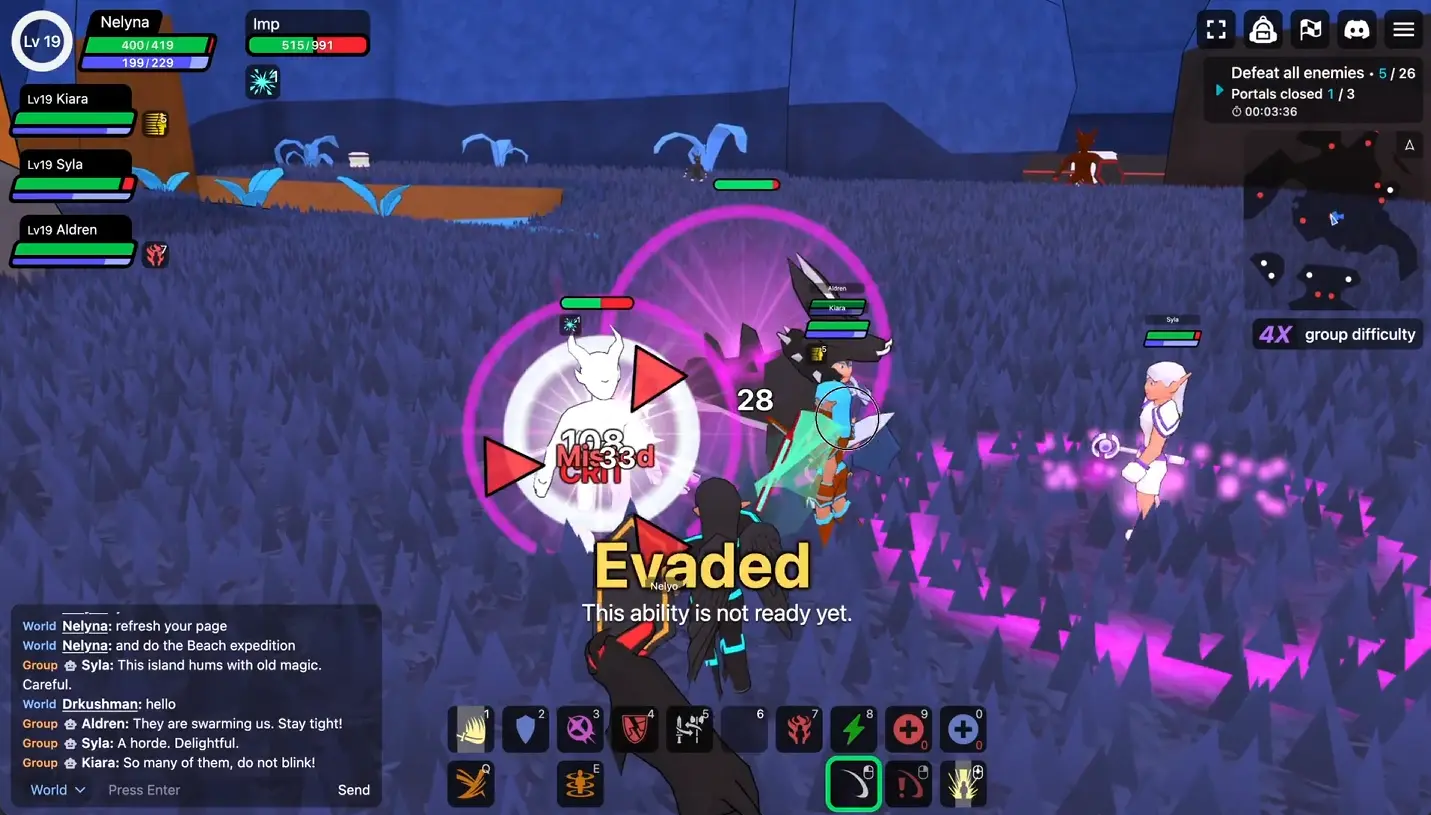
Mana Blade
Mana Blade is the one built by someone who stuck around after the viral moment most vibe-coded games chase. A solo developer going by Verekia didn’t just build the game, he built the engine underneath it: a custom WebGPU renderer called VoidCore, written specifically for Mana Blade and nothing else, entirely AI-generated. It renders around 250 independently animated characters at once using raycasts instead of instancing, and it still runs fine on older phones, a detail that matters more than it sounds like it should, since most browser MMOs quietly give up on that. Four classes: a wind-magic gunblade duelist, a sword-and-shield tank, a support mage, a trap-and-gun ranger. Free to play in-browser or through VIVERSE, still labeled “in development,” with an original score composed for it rather than licensed or AI-generated filler.
Play at manablade.com
Special mention: Valenfeld
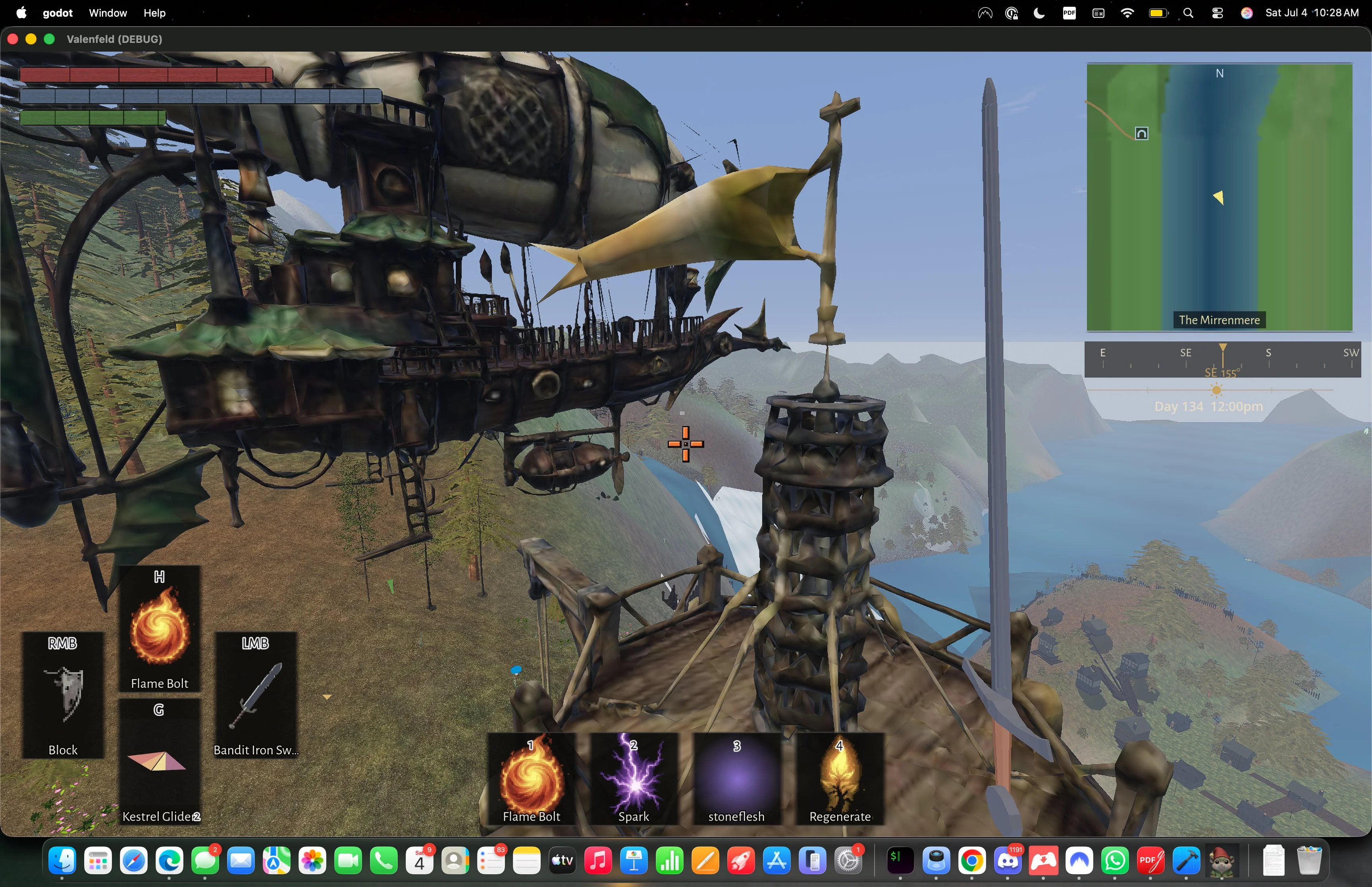
Worth naming even though it doesn’t quite qualify. Valenfeld, from Arcos Labs, is solo or co-op, not a persistent shared world, and it’s a Windows/Mac download rather than something that loads in a browser tab. But the ambition is real: a hardcore open-world RPG with no fast travel and no quest markers, shipping alongside its own 301-plate, 758-entry world atlas that the in-game books quote word for word. Climb, glide, and grapple across a vast procedural world hunting named artifacts through 100+ dungeons. If the question here is how much world one person can generate fast, Valenfeld might have the best answer of the four.
Download at valenfeldgame.com
fly.pieter.com took three hours. These four took anywhere from a weekend to several months, and every single one of them is still, by any normal measure of how long an MMO is supposed to take, absurdly fast.