Aniket Jatav is co-founder of Crayon, a game-development platform built around “agentic game development,” positioned as something between a traditional game engine and an AI coding assistant. His own background runs through an engineering degree before he pivoted into design and visual arts, spending years on visual pipeline and product work across venture-backed companies. His co-founder, Tushar Sharma, brings a more traditional, hands-on game-development background, including work on AAA titles and past web3 projects. The two have known each other for roughly five years and previously worked together building a metaverse project.
Crayon is currently in open beta. Jatav says the company recently closed a term sheet for a small pre-seed round, capital he says will help the team scale the platform to more users. We talked through what Crayon actually does under the hood — a multi-agent system that breaks game development into steps handled by dedicated agents for mechanics, art, and asset production — and where he wants to take it next, from exporting to third-party portals to an eventual move beyond browser-based games.
| At a glance | |
|---|---|
| Platform | Crayon — agentic game development |
| Status | Open beta |
| Under the hood | Multi-agent harness, ~15 steps, routed across multiple models |
| Business model | Subscription — no revenue share, no platform lock-in |
| Export targets | Crayon Arcade, itch.io, Poki, CrazyGames |
| Funding | Pre-seed term sheet recently closed |
Who Crayon Is Actually For
Vibecode.game: Every few months another “anyone can make a game” tool shows up promising to turn a total beginner into a game developer overnight — and most of them top out at something you’d be embarrassed to show a friend. You’ve built something that leans the opposite way: toward people who already know what a game economy or a voxel style is. Who’s actually supposed to sit down and use this thing?
Jatav: Our ideal customer is the experienced web game developer or studio — that’s where we’re most useful today. That said, we do get newer developers on the platform too, so first-time experience is something we pay real attention to; the abstraction we’ve built is meant to work across skill levels. Technically, anyone can build a game with it. But it’s still a little technical under the hood — we give you granular control over assets, a dedicated editor to tune scenes and levels — so someone building their very first game with zero programming or game-dev familiarity might not get as much out of it as someone who already knows the basics.
Inside the Build: How Crayon Turns a Prompt Into a Game
Vibecode.game: Are you using a proprietary model?
Jatav: Not a proprietary model — what we have is our own harness, a system that routes across multiple existing models and learns from the process, which is why output quality keeps improving over time. On the UI you might see four visible steps, but underneath it’s closer to a 15-step process built to mirror how an actual game studio operates — which makes sense given our backgrounds: my co-founder from game-studio development, me from the visual/product side. We route to different models depending on what we’ve found performs best at each step — we’re not necessarily using the newest or biggest model everywhere, because we’re balancing cost against output quality.
Vibecode.game: That harness you just described isn’t one model wearing a trenchcoat — it’s a whole invisible org chart. Do you actually have separate agents for separate jobs in there, the way a studio would have separate departments?
Jatav: Yes — it’s a multi-agent architecture, with sub-agents inside each agent. If you’re just generating assets, that routes through a game-artist agent, which itself has sub-agents handling coloring, structure, texturing and materials separately. It’s a fairly complex orchestration layer. The real depth of the platform shows up once you dive into one game specifically — you can add or edit textures and materials directly, similar to a game-dev tool you’d already be familiar with.
Vibecode.game: So with all that machinery running in the background, does the developer still keep full creative control?
Jatav: Full control, yes — we’re not trying to replace developers, we want to help people build more games. What we’re taking off their plate is the repetitive stuff.
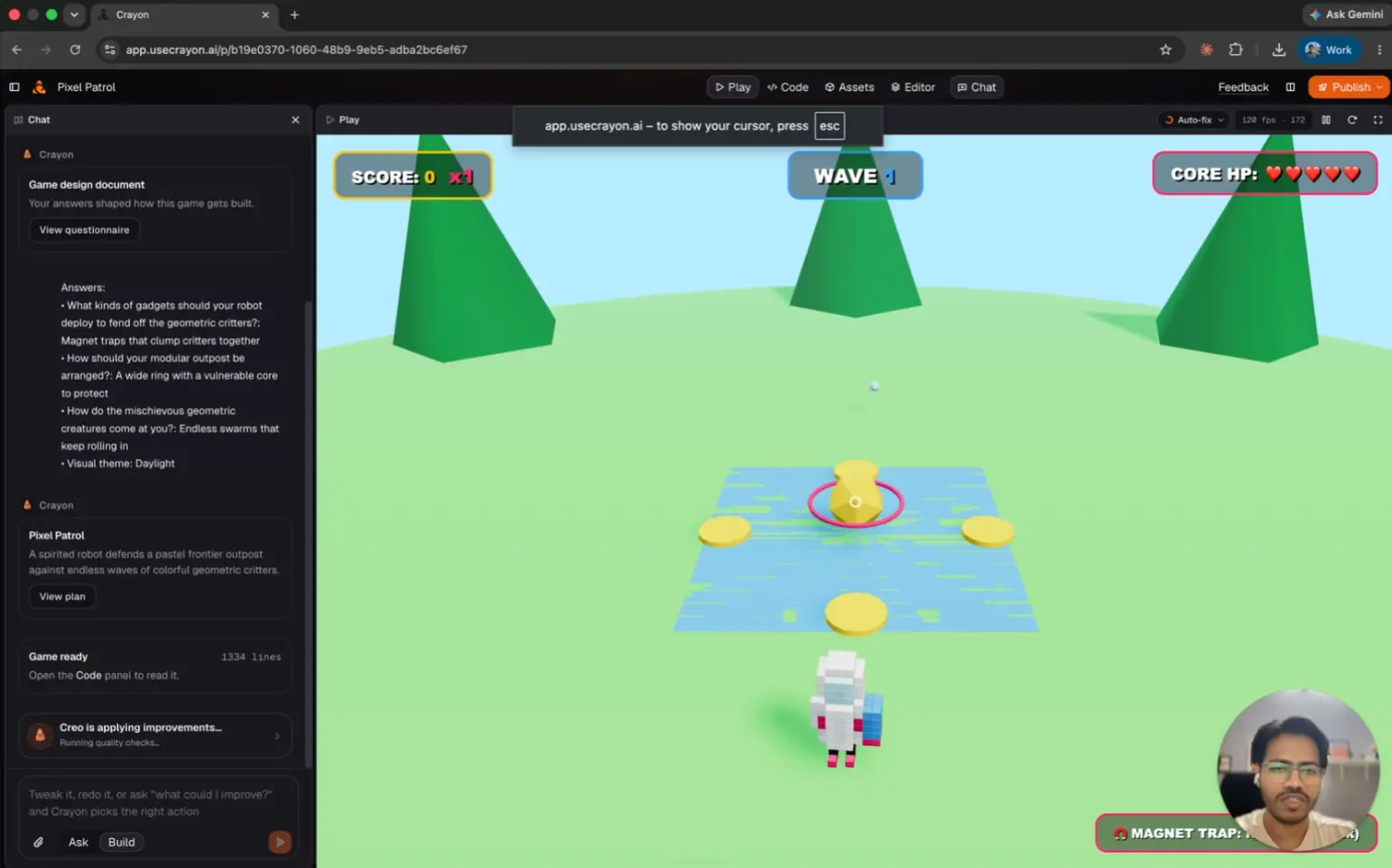
Vibecode.game: What happens when someone’s prompt is vague, or just bad?
Jatav: We saw this early — friends we gave early access to were prompting pretty lazily. There are two things that help. First, a prompt-enhancer button that improves what you’ve written. Second, if someone gives something broad, like “build a Minecraft-style game,” we run a clarification flow: roughly six to eight questions per round, covering things like world structure, economy, and visual style — is it an alien world, day or night, and so on. After that, our planning agent writes out a full plan before anything gets built. It’s still better to come in with a detailed prompt — a lot of users show up with their own existing game design documents, and they tend to get the strongest results that way. Game development itself is complicated enough that this can’t be a one-prompt process; a lot of ideas people come in with are pretty unrefined to start.
Vibecode.game: Are you seeing people bring in unfinished projects to complete on Crayon?
Jatav: Yes, and it’s one of the more interesting patterns we’ve seen — people coming in with ideas they’d parked for a while, building them out, sometimes spending hours polishing, then coming back days later with more ideas and continuing to build.
Vibecode.game: You mentioned someone might type “Minecraft” or “Fortnite” into a prompt. Does Crayon actually recognize specific existing game titles?
Jatav: It does — partly because we’ve fed it that information over time, and partly because the underlying models already recognize a lot of these titles, even if consumer tools like Gemini would usually refuse to build something derivative for copyright reasons. If the output is transformative enough, it’s fine — there’s already a Minecraft-inspired title live on both Poki and CrazyGames. You obviously can’t build the exact same game, but taking inspiration is recognized and accepted.
The Visual Quality Problem
Vibecode.game: AI-generated games have a look — muddy textures, assets that don’t quite agree with each other, environments that feel like they were assembled rather than designed. It’s the thing that gives the whole category away. You just described agents dedicated purely to coloring and texturing, which suggests this isn’t an accident on your end. How much does your own background drive that?
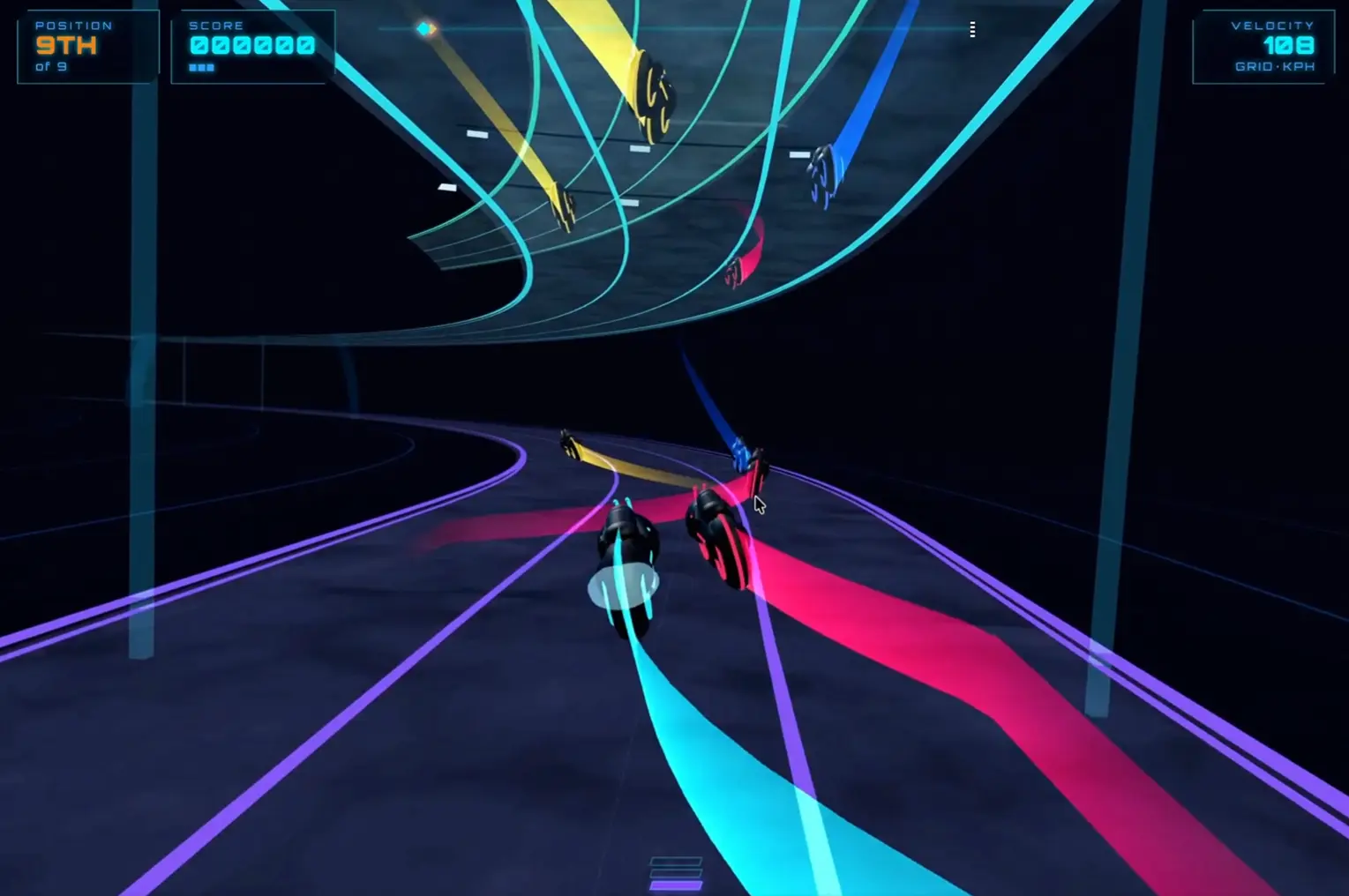
Jatav: It’s been a personal frustration of mine too. My co-founder cares a lot about mechanics and functionality — that’s his lane. I come from a visual background; I have an engineering degree but pivoted my whole career into design and visual arts. I’ve spent a lot of time with art books from games like The Last of Us, and I kept asking myself why AI-generated games didn’t look anywhere near that good. There’s obviously a human factor a platform like ours may never fully replicate, but we want what comes out to at least be publishable-quality wherever you take it. Getting the visual quality right was actually the first real problem we focused on, after getting basic game functionality working — because that’s where LLMs tend to drift. We’re still not 100% there, but we’re getting closer.
Vibecode.game: I thought I’d seen messaging positioning Crayon as a hyper-casual platform. Was that accurate?
Jatav: That’s outdated — pretty standard startup A/B testing on messaging to see what drives traffic. We’re not built exclusively for hyper-casual games. We’re seeing FPS-style games and others come out of the platform just as well, so that positioning wouldn’t be accurate anymore.
Vibecode.game: Are there other game-dev tools you’re personally impressed by?
Jatav: Prompt-to-3D tools, specifically Tripo — we’re actually in touch with them about a possible partnership. What used to take hours in a tool like Blender, they’ve automated well, and they give you real control, like hard caps on vertex count, while still producing quality output from a good concept.
Vibecode.game: Does Crayon generate all its own assets, or is there a shared library?
Jatav: Both. We have our own asset generation, but also a library for generic assets — a tree doesn’t need to be regenerated from scratch every time, so we don’t make people spend credits or compute on that unless they want a custom version.
Publishing, Platforms, and What’s Next
Vibecode.game: You’ve got Crayon Arcade, but I also saw on your site that games can be published to Poki or CrazyGames. Do you have formal partnerships there, or can people just take their code wherever?
Jatav: No partnerships yet, though we’re in touch with CrazyGames and hoping to get something formal there eventually. What we do have is the technical piece: Poki and CrazyGames each have their own build checklists and SDK requirements. Most platforms just hand you a basic HTML5 build and leave you to deal with that yourself — we transform your codebase to match whichever platform’s requirements and integrate their SDK directly, based on where you say you want to launch.
Vibecode.game: Does that mean you need to know your target platform before you start building?
Jatav: Most people already do — most of our users are web game studios or developers who came in with a clear destination in mind. itch.io is very flexible, so nothing special is needed there; we have a direct bridge to it. For Poki or CrazyGames, it’s better if you plan for it upfront, but you can still export at the end either way — it just takes extra processing time, since we’re rewriting the codebase for that platform.
Vibecode.game: Is Crayon Arcade open to everyone, or is there curation?
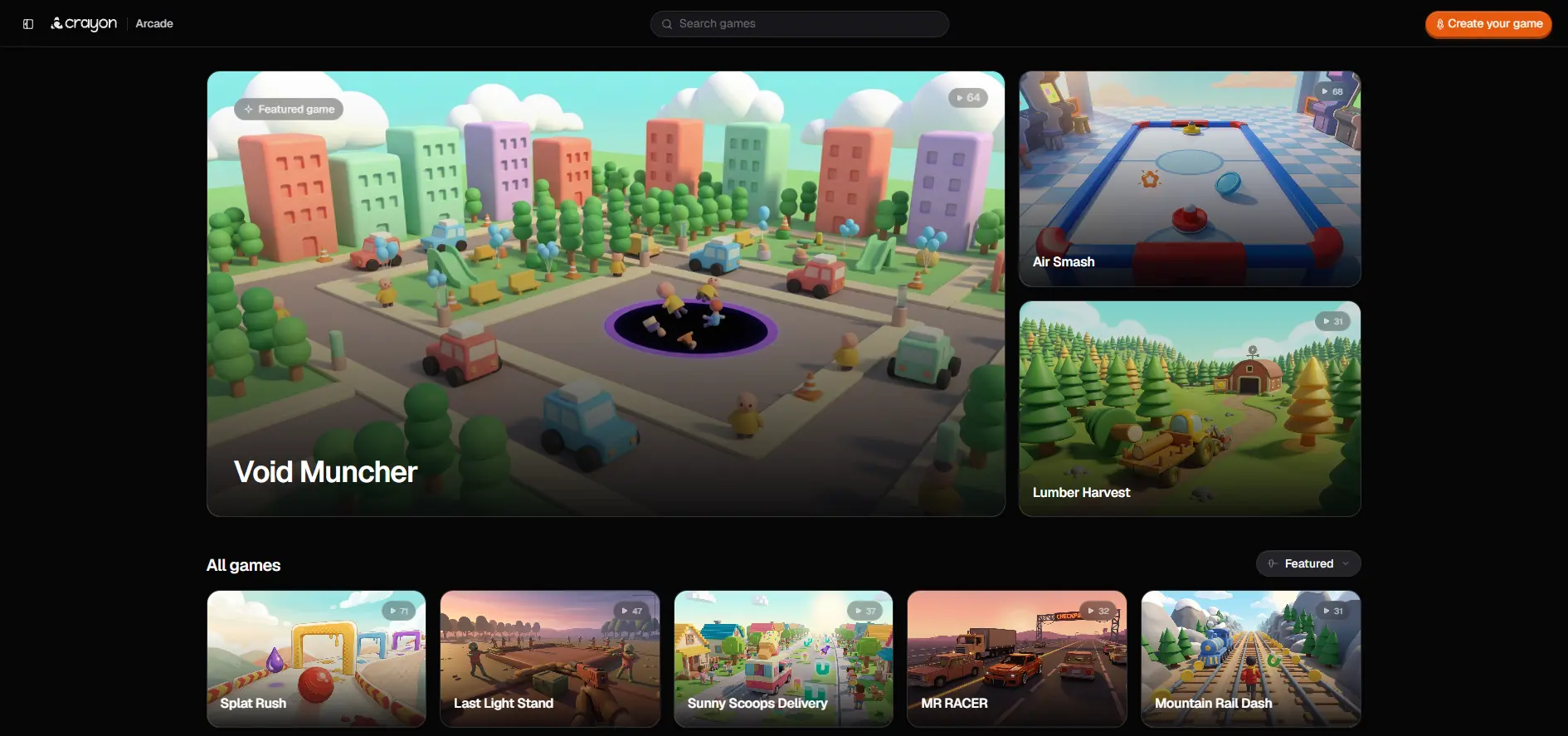
Jatav: No curation. Any game built on the platform can be published to the arcade, and there’s no exclusivity — you’re free to publish elsewhere too. The arcade honestly isn’t our primary focus; it came out of us testing games internally and wanting to share them. Our focus is the developer tool itself. We might build the arcade into something bigger down the line, similar to a Poki or CrazyGames model, but that’s a separate effort we’re not focused on right now.
Vibecode.game: You’ve talked about wanting better visual quality than what these AI platforms usually produce — but nearly everyone in this space, including you right now, is still stuck making web games. Is Crayon actually going to break out of the browser, or is “web” just the ceiling this whole category lives under?
Jatav: Web-only right now, but going client-based is very much the plan. Adjacent markets — YouTube Playables, Snapchat’s own games, Discord — all run on similar underlying tech, just different SDKs, and that’s where we want to play for the next couple of months before going fully native. The long-term vision is: build a game once, take it anywhere — Steam, PC, eventually mobile on Android and iOS alongside web. We’re not looking at console platforms like PlayStation anytime soon.
Vibecode.game: How do you differentiate from other prompt-to-game platforms?
Jatav: The real differentiator is control: unlike Unity or Unreal, which take a cut once you’re making real money off a game, there’s no platform lock-in with us. You build your game, you own it, you can take it wherever you want. Our model is a subscription, not a revenue share.
Vibecode.game: You mentioned you’d just closed a pre-seed round. What’s that capital earmarked for?
Jatav: The R&D work is done — we’ve proven the platform works. This capital is mainly runway to scale it to a lot more users, and to keep advancing the platform itself.
What’s Already Live
Crayon is currently in Open Beta. Sign up at app.usecrayon.ai.
Check out some of the games being built with Crayon: