Screenshots
Game Trailer
Gameplay Mechanics
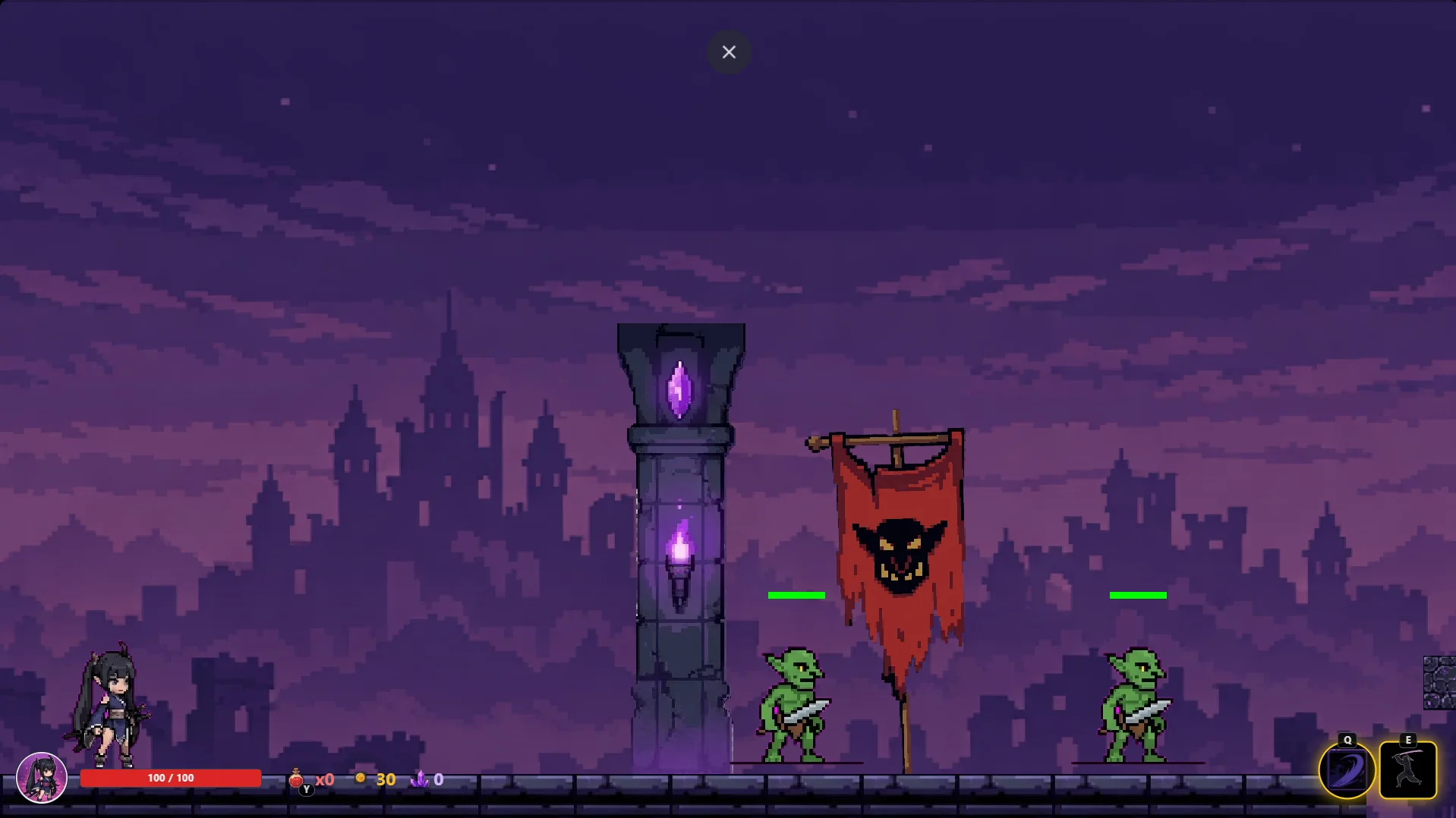
The Last Seal is a 2D side-scrolling action-platformer.
The core loop is: traverse a level by running and jumping across platforms and gaps → fight enemies using a rising combo system → survive to the end of the level → unlock rewards and progress to the next stage.
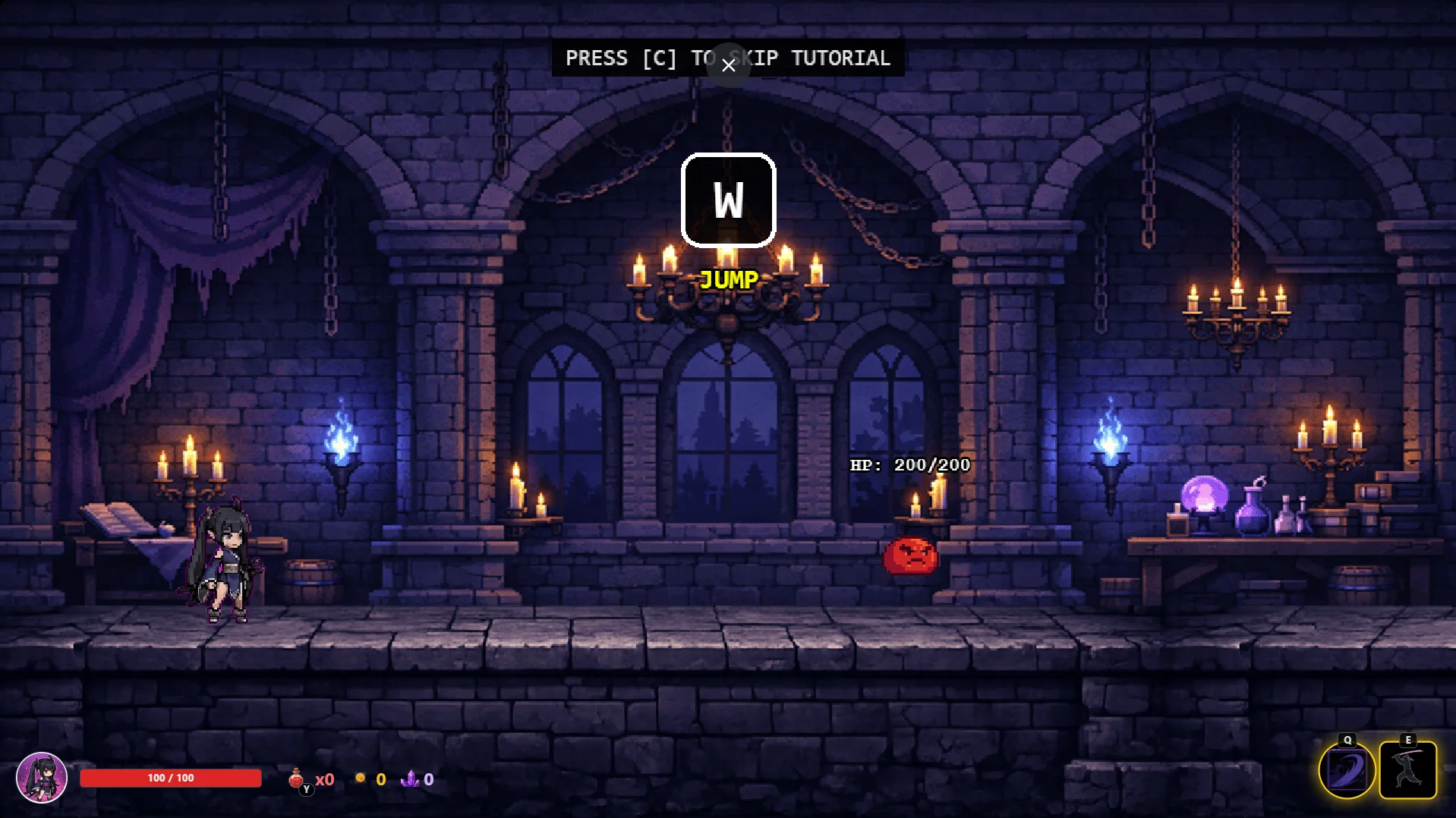
Controls are mapped to WASD and Arrow keys for movement (fully duplicated across both so players can use either), with jump on W/Up. Tapping jump twice quickly triggers a higher jump. Space is dedicated to a dash. Attacks are on X or left-click, and a high-damage special technique is on Q with a 60-second cooldown.
Moment to moment, players are reading the gap between platforms and timing their jumps and dashes precisely. Combat is woven into traversal rather than separated from it: enemies appear along the path.
Key Features
-
Rising 4-hit combo attack system — each attack input advances a combo string (light slash → heavier slash → knockup → finisher), rewarding sustained pressure over button-mashing.
-
A special technique (Q) that can drop most enemies in one hit, available once every 60 seconds.
-
Real fail states — falling through a gap or losing all HP both end the run instantly with a Game Over screen showing your result and an instant Retry.
-
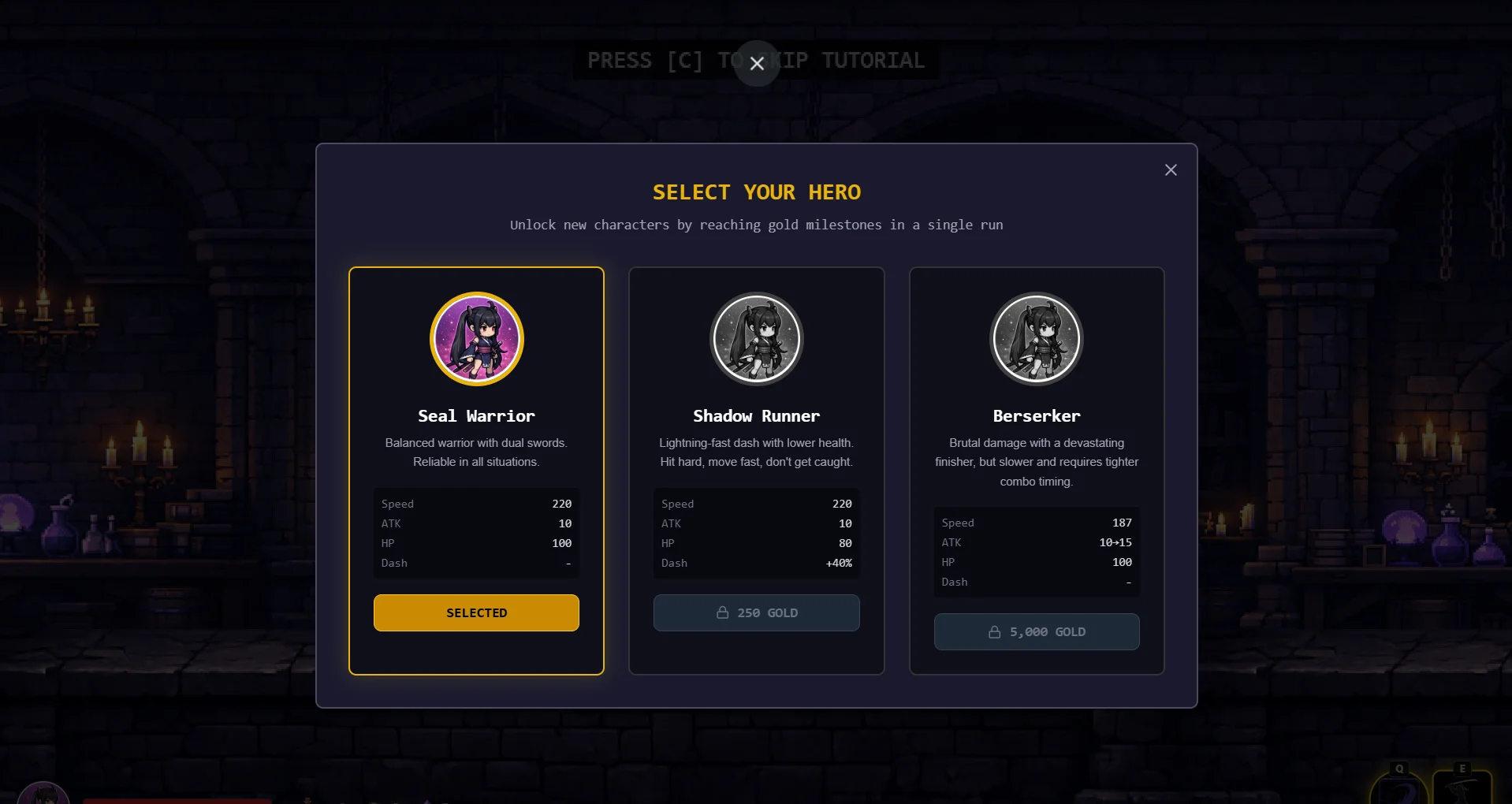
Three playable Sealkeepers, unlocked at level milestones, each with a distinct playstyle (balanced, fast/fragile, slow/heavy-hitting).
-
A narrated opening lore sequence, spoken aloud before the title screen, setting up the game’s story.
What makes my game stand out from others in its genre?
Most action-platformers treat story and mechanics as separate layers, narrative in cutscenes, mechanics in gameplay. The Last Seal ties them together directly: the game’s central mechanic (falling through a gap ends your run) is the same idea as its central story (every generation’s seal eventually breaks). The three unlockable characters aren’t just skins — they’re earlier Sealkeepers whose techniques literally carry forward through the blade, reinforcing the “every generation, someone before you tried” theme mechanically, not just narratively.
It’s also built with real stakes in a genre that often softens failure, no auto-bridging over gaps, no forgiving safety nets, just a clean, fast Retry loop that keeps failure feeling fair rather than punishing.
AI Tools Used
Verse8 — core game development and implementation
Claude — prompt engineering for Agent 8, asset editing, and copywriting
Game designer Mind tool — game design and planning
How AI was integrated into the development process
I used the Mind Designer Toolto plan the structure and design at the game-design level — mapping out the new control scheme, the combo and special-technique systems, the three-character unlock structure and refining the mechanics in detail then worked with Claude to convert each part of that design into discrete, sequential prompts for Verse8, which handled the actual implementation, Claude was used to diagnose the gap and write targeted correction prompts rather than resending full specs.
Verse8 was used to build and implement.
Community
Ratings and reviews are public. Use the heart in the hero to like this game.