Screenshots
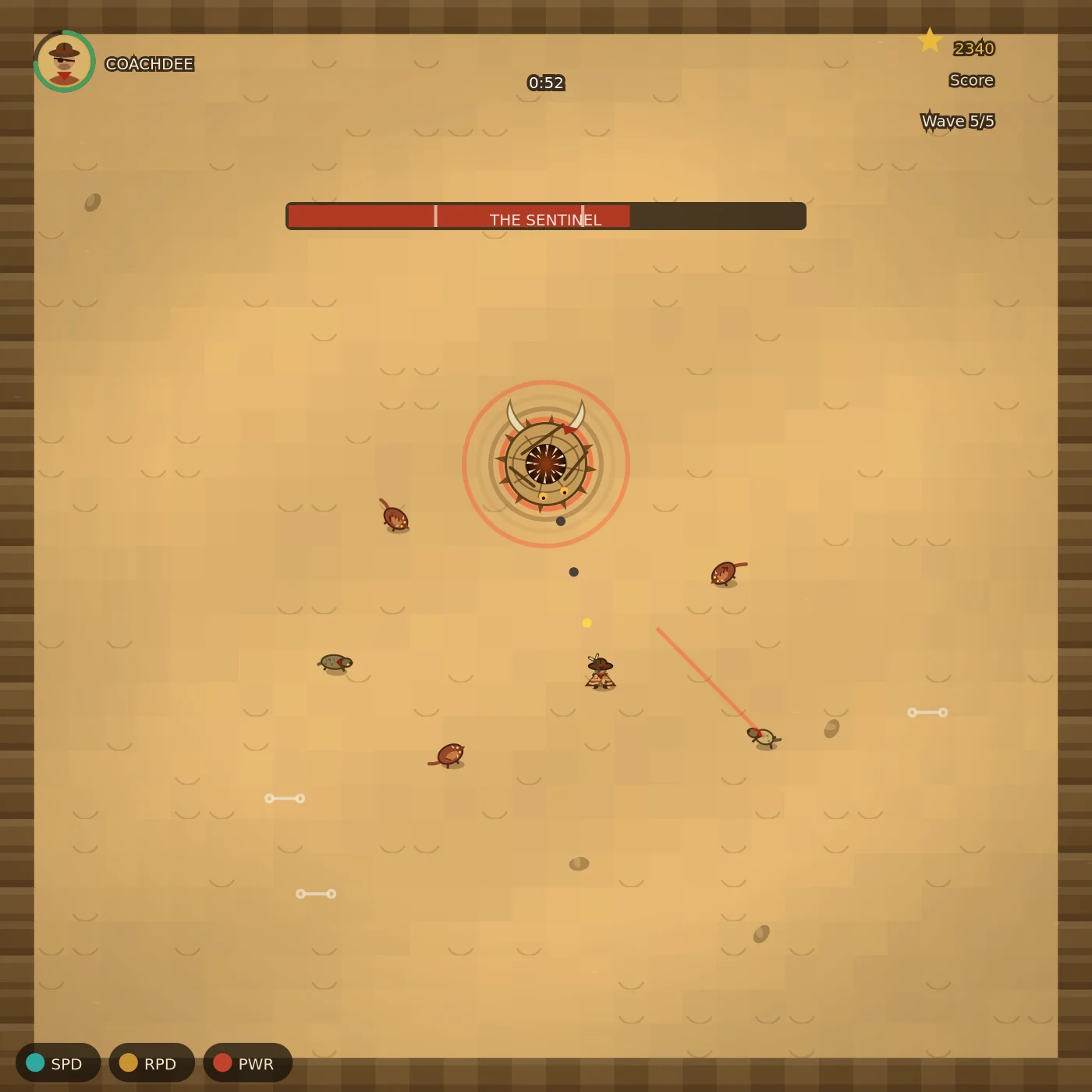
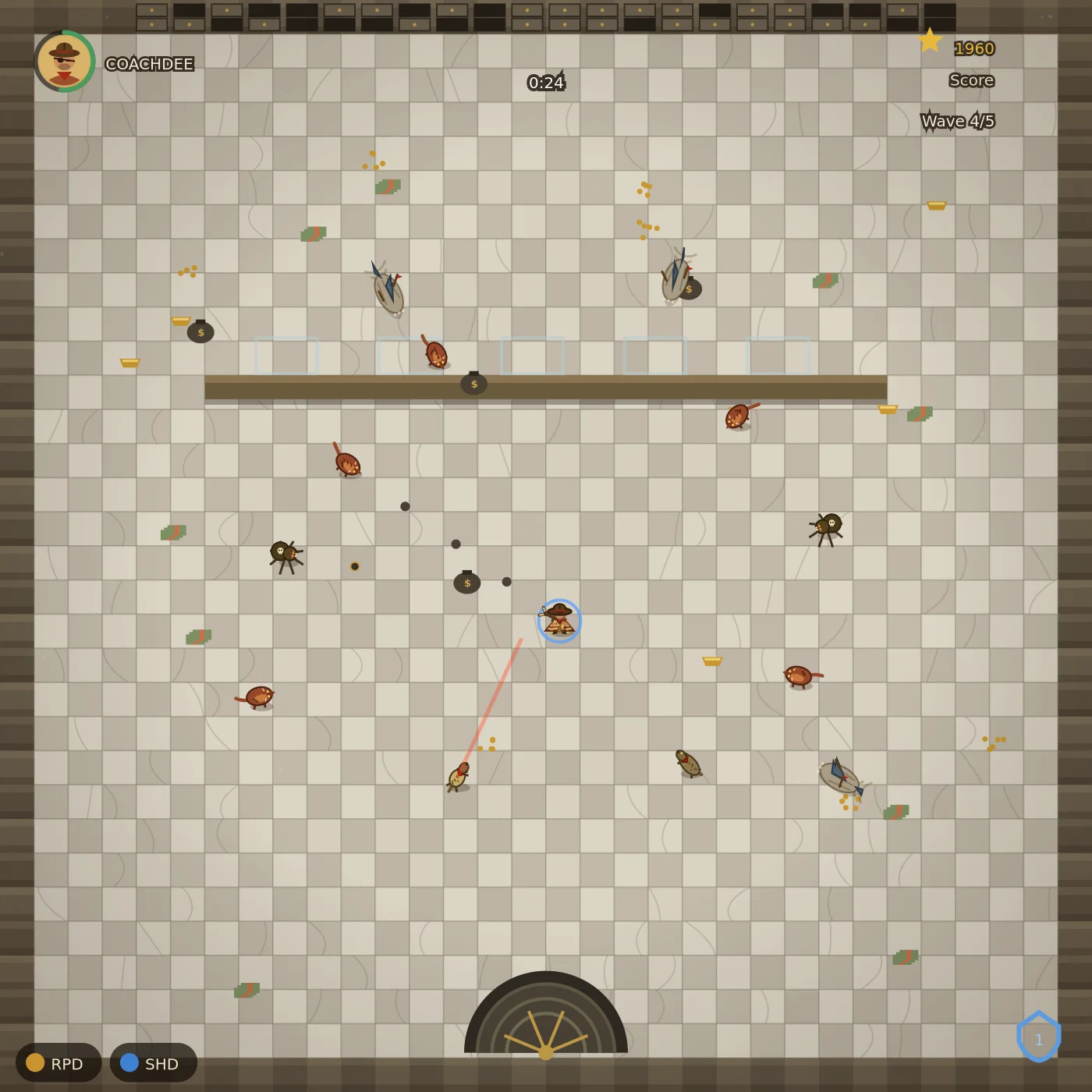
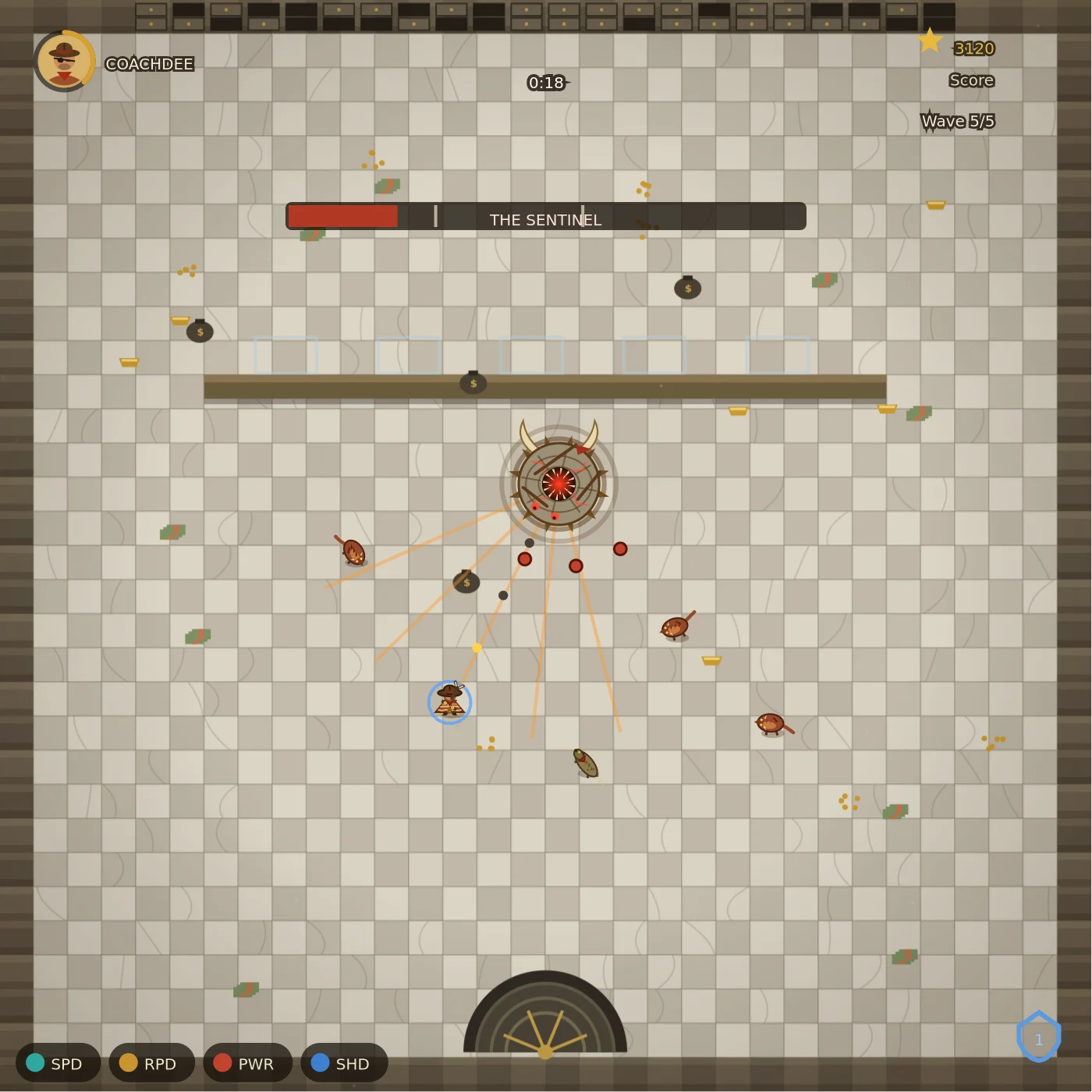
GAMEPLAY MECHANICS
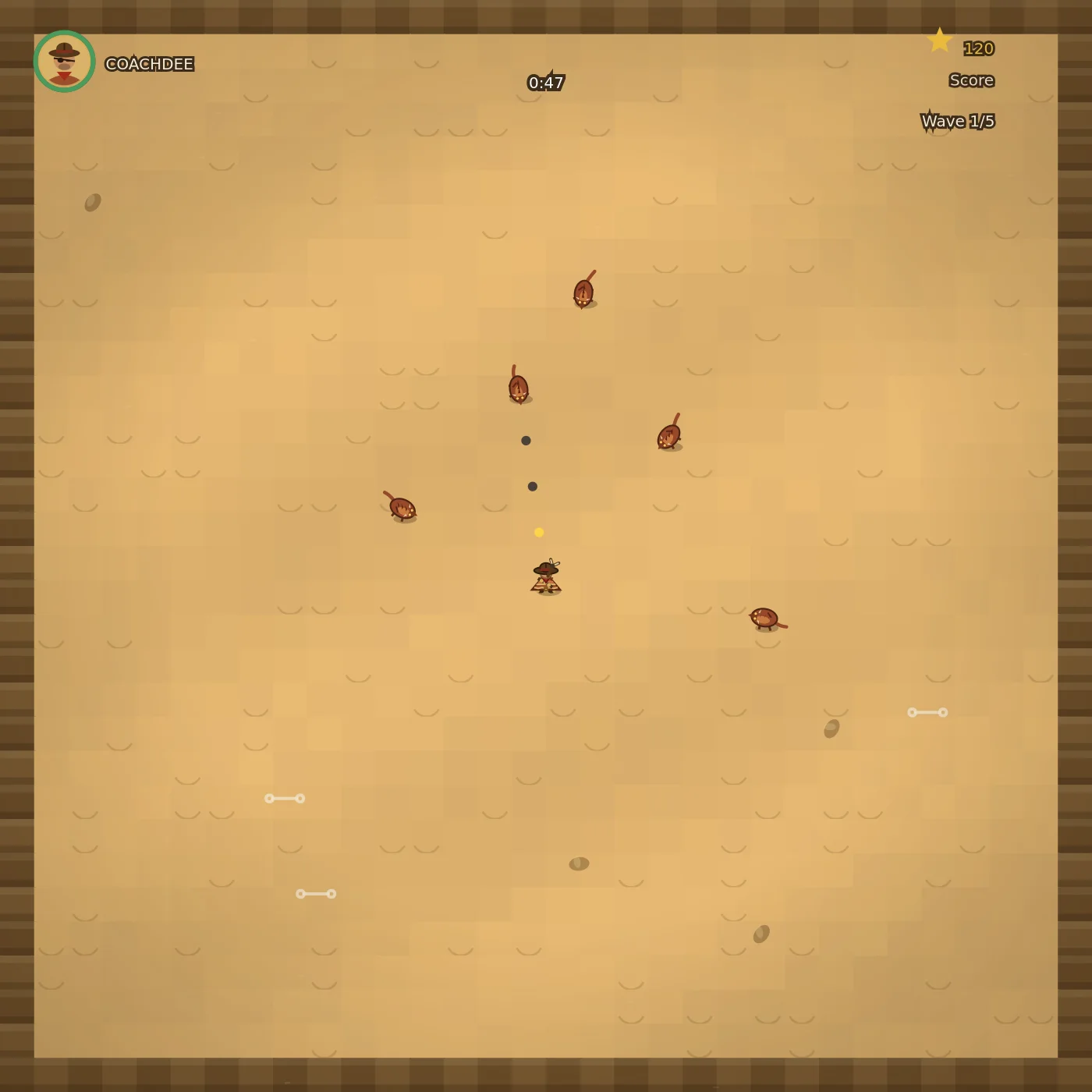
Gunslinger: Last Stand is a top-down survival shooter about one cowboy, one slingshot, and a desert that keeps sending things to kill him. No story screens, no tutorial wall. You press start and something is already walking toward you.
You hold a 32x32 arena for five timed waves. Your slingshot fires on its own at a fixed rhythm, so the game is never about clicking fast, it is about where you stand. - WASD / arrow keys — move. On mobile, drag anywhere and a joystick appears under your thumb.
-
Mouse — aim. On mobile it aims for you, locking to whatever is closest.
-
Firing — automatic, 1.4 shots a second, always. You never press a fire button.
-
The catch — you move 10 percent slower while shooting. Standing still to deal damage is exactly how you die.
Every standard enemy dies in three clean hits. That is deliberate. You always know what one enemy costs you, so the pressure comes from how many are arriving and from where, not from guessing at health bars.
KEY FEATURES
-
Opens and plays in the browser. No download, no install, no account, no email. One 118 KB file that loads before you have finished reading this. - Zero image files. Every character, enemy, boss, icon and portrait is drawn live with canvas path commands. The whole game is code and nothing else. - Zero audio files. The music and all twelve sound effects are synthesized in the browser with Web Audio. The soundtrack is a slow, warm loop that never repeats the same way twice.
-
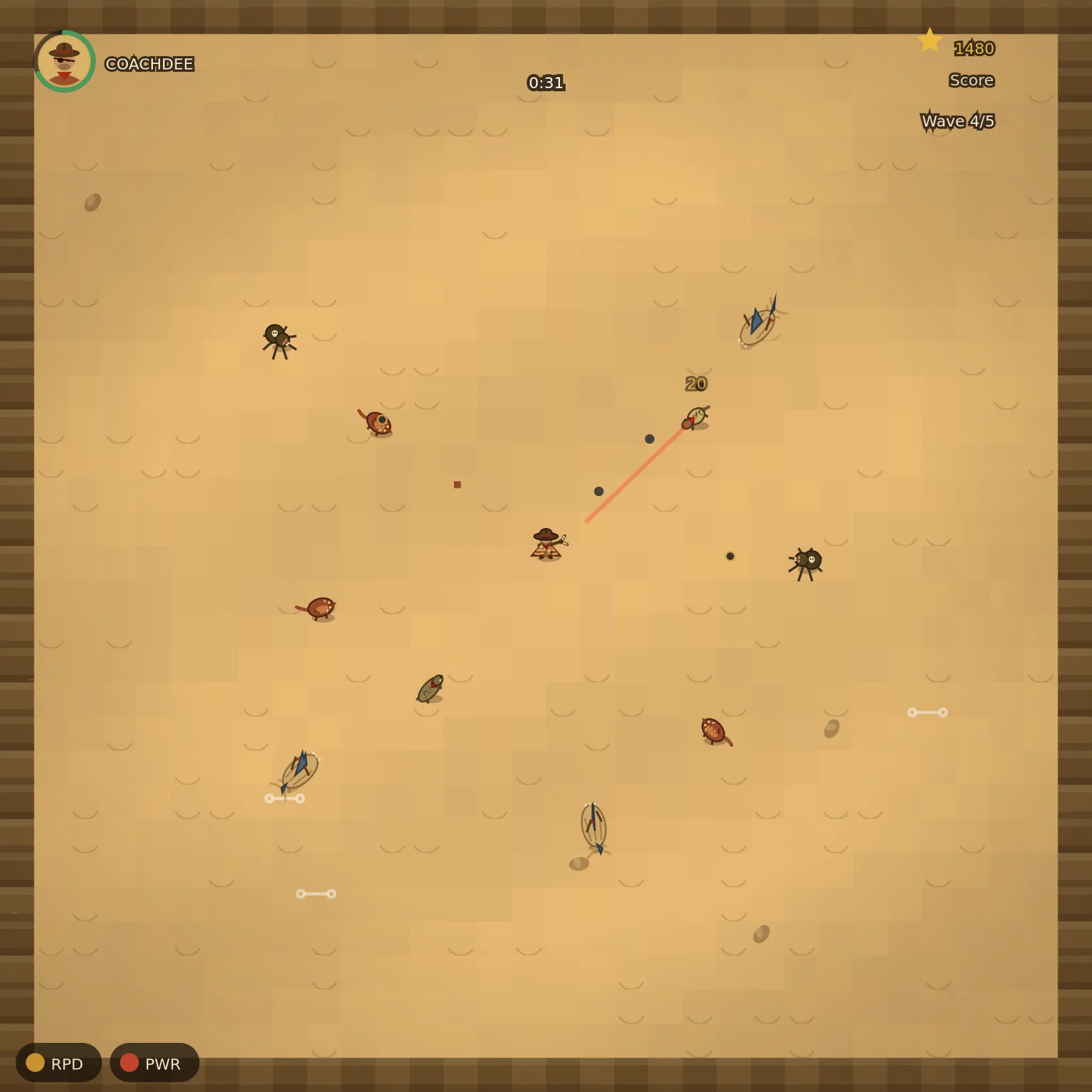
Every dangerous thing tells you first. Lunge lines, slam rings, barrage lanes. If you get hit, you were told.
-
Draft four of five power-ups per run, one per wave, never twice. Short runs, different build every time.
-
Two maps with two full interface themes. Pick Bank Heist and the entire game goes dark on you.
-
Pick your gunslinger, male or female, both drawn in the same hand as the character you play. - A full run is about five and a half minutes.
WHAT MAKES THE GAME STAND OUT FROM OTHERS IN ITS GENRE
Most survival shooters make you feel strong by inflating numbers, bigger damage, spongier enemies, upgrades stacked by the end. I went the other way. Every enemy dies in three hits from the first second to the last. Nothing ever gets tankier. The difficulty is purely how many are coming and from which direction, which keeps the screen readable when eleven things are moving at once.
The other rule I set was that it never kills you without warning. Every dangerous attack paints itself on the ground first.
And it’s one file. No engine, no libraries, no sprite sheets, nothing to download. Every pixel is drawn by code and every sound is built at runtime. That started as a jam constraint and ended up defining the whole look.
AI TOOLS USED
- Mindsby Animoca Brands (Game Designer Mind — full design document and system specification) - Claude(all code, balance iteration, automated testing)
HOW AI WAS INTEGRATED INTO THE DEVELOPMENT PROCESS
AI ran through the whole build, but in separate lanes with clear jobs.
Design — I used the Game Designer Mind on Hellominds to write the design document before a single line of code existed. It gave me the wave table, the enemy roster with real stats and behaviors, the boss attack timings and phase thresholds, the HUD layout, and an ordered build checklist. Starting from a locked spec meant every conversation afterwards was about execution instead of arguing with myself about what the game was.
Code — Claude built the entire thing, fourteen playable versions from the first grid to the final polish pass. I worked conversationally: I would play a build, say what felt wrong in plain words, and it would come back with the change. The core loop came first, then the enemies, then the boss, then audio and art, then the interface got rebuilt about four times because I kept changing my mind about the HUD.
Testing — I iterated couple of times until I got something closer to what I actually want.
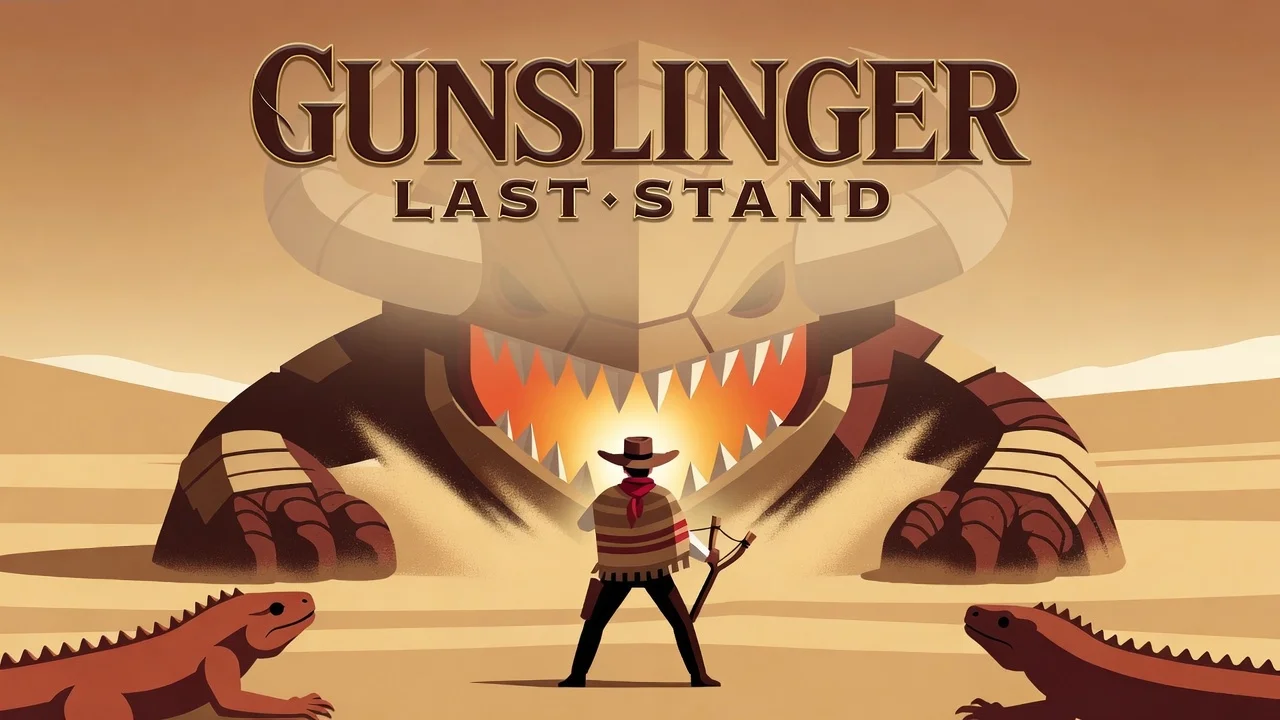
Human — the concept, the cowboy, the red cloth on every monster, every difficulty call, every “no, that looks wrong,” and the decision about what was actually fun to play. The AI was fast and it was honest with me. The taste was mine. Final touch, I used Grok to generate the game cover (image).
Community
Ratings and reviews are public. Use the heart in the hero to like this game.