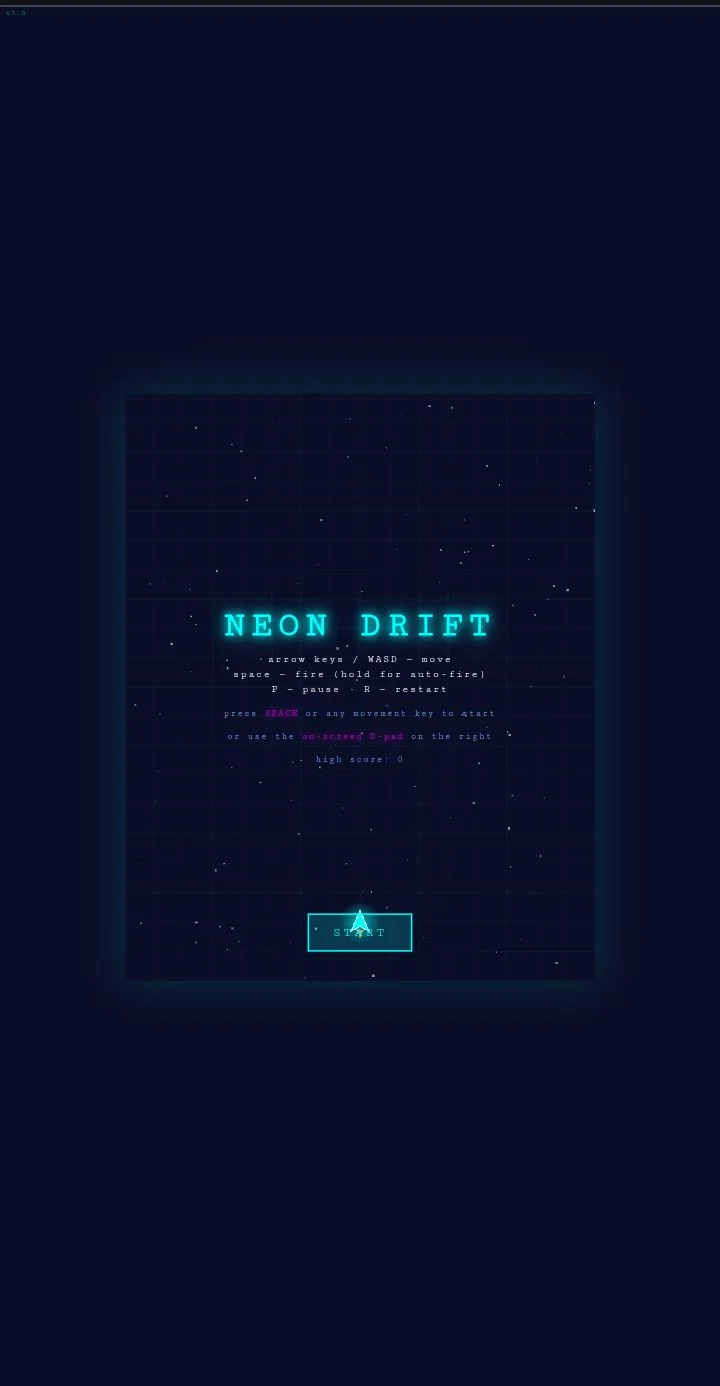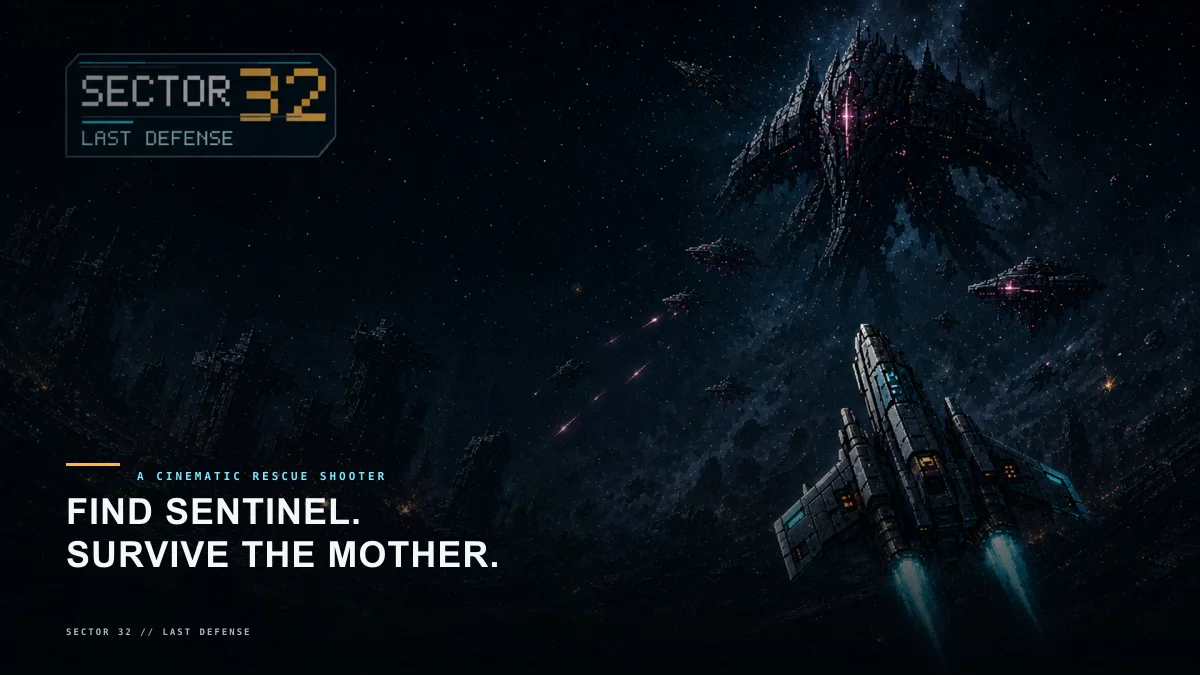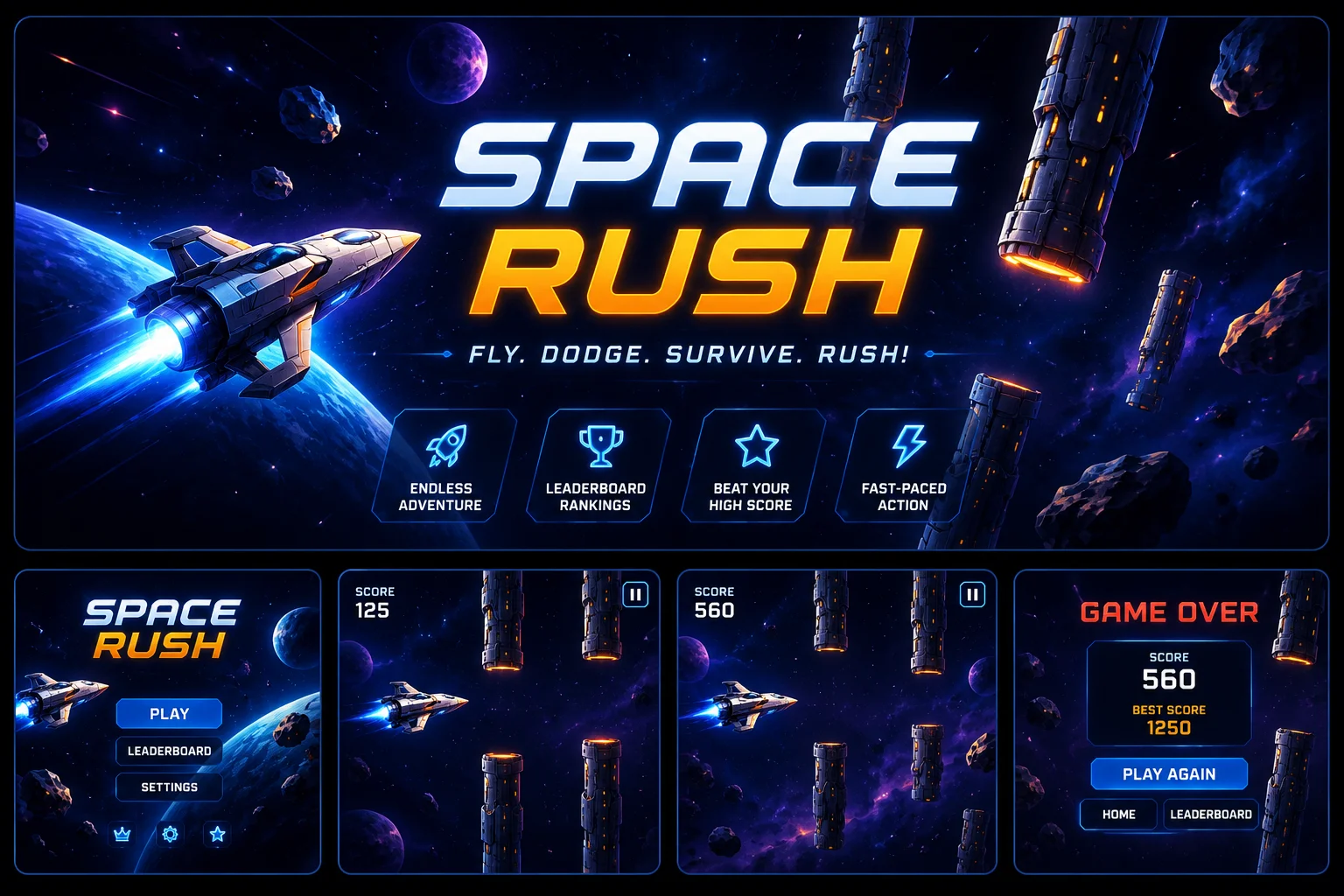
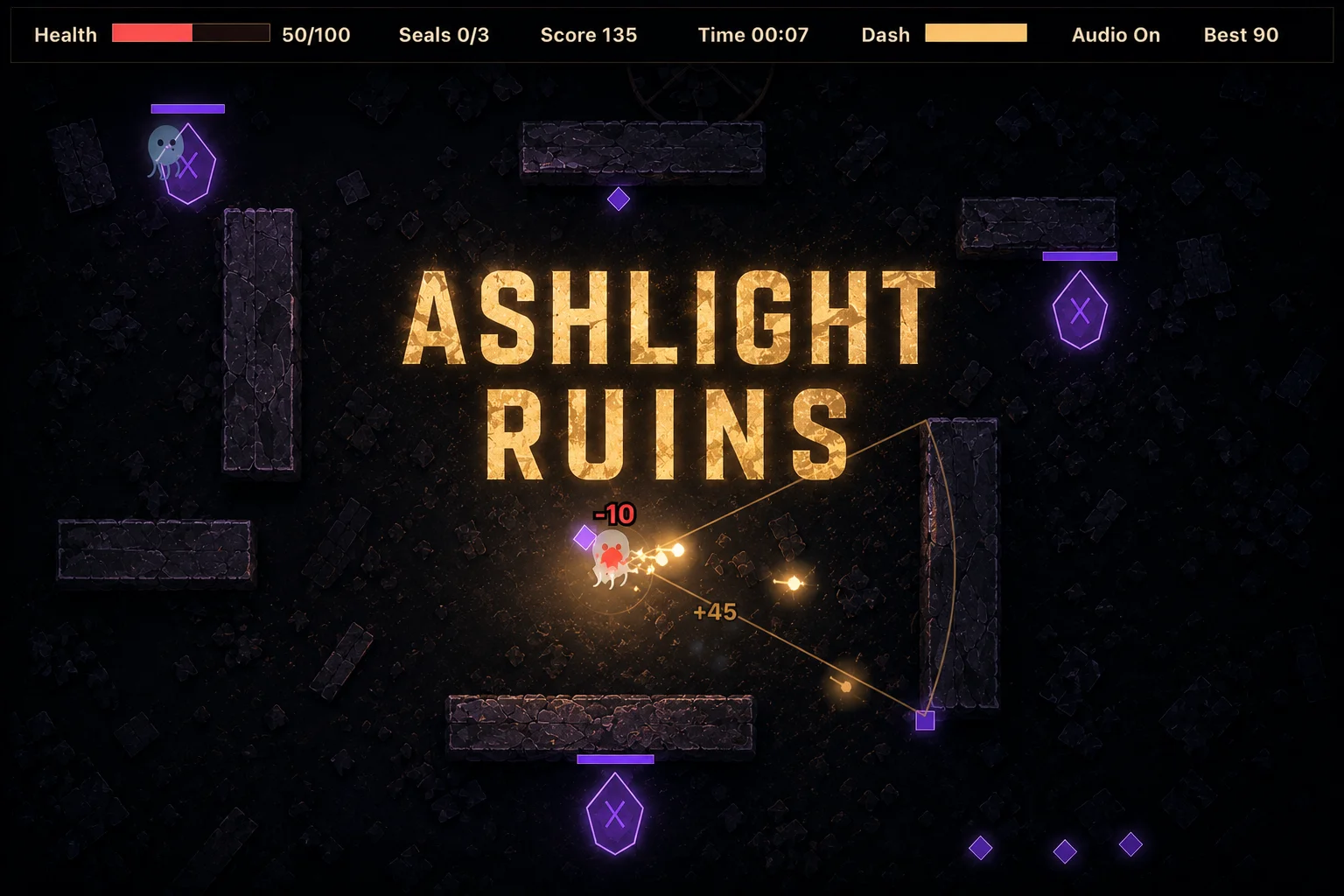
Screenshots
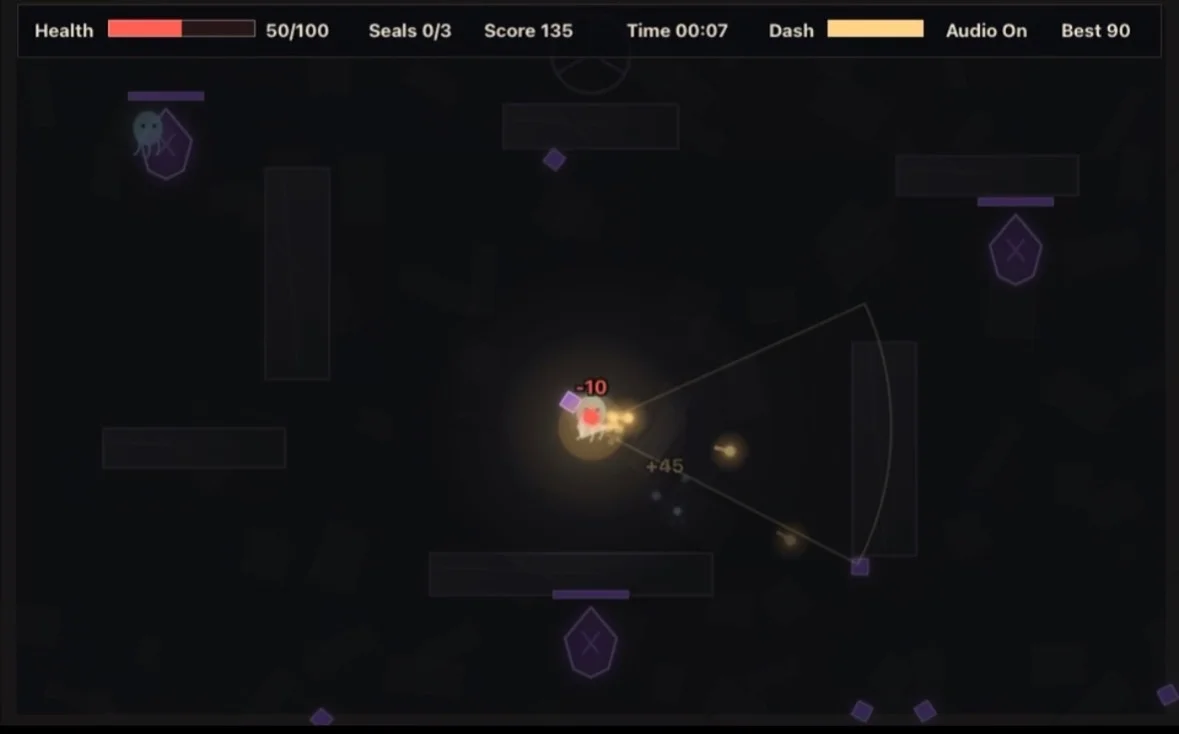
Ashlight Ruins
High-Level Concept / Design
Working title
Ashlight Ruins
Concept statement
Aim a warding light to expose and banish ghosts, dodge cursed volleys, and break three seals to escape haunted ruins. The fun comes from converting precise aim and perfectly timed movement into control of a hostile arena.
Target audience
TBD - audience was not supplied. The first playable assumes players comfortable with real-time mouse and keyboard action. Accessibility and age targets require steward confirmation.
Player experience and point of view
A single player sees the arena from a top-down view and inhabits a lone ruin warden. The intended fantasy is fragile but capable: survival comes from reading danger, committing the aim, and escaping at the last possible moment.
Product Design
Unique selling points
- The warding light is both weapon and flashlight, so the direction of the player’s aim determines which threats are clearly visible.
- A well-timed dash burns away nearby curse projectiles, converting defensive movement into a brief counterattack window.
- Every broken seal changes which enemy pattern dominates, so the route the player chooses creates a different escalation and forces new aiming and dodging decisions.
Genre
Top-down action-survival shooter with a compact arena-escape structure.
Visual and audio style
Stylized 2D gothic silhouettes built from original procedural shapes: charcoal stone, amber warding light, pale ghosts, and violet curses. Audio uses sparse wind, low drones, sharp shot chimes, and distinct attack-warning pulses.
Platform and technology
TBD - final platform was not supplied. The first playable is implemented as a dependency-free HTML5 Canvas browser game for rapid testing, with mouse and keyboard controls.
Schedule and scope
TBD - schedule depends on team confirmation. First-playable scope is one arena, one weapon, one dash, three enemy behavior patterns, three cursed seals, health, score, pause, win, loss, and restart. Metagame, inventory, crafting, narrative scenes, multiplayer, and monetization are out of scope.
Game world and fiction
The Ashlight Order once pinned a living curse beneath three seals. With the order gone and the ruins waking, the last warden enters carrying a lantern that can expose spirits and fracture the seals. Breaking them opens the exit but releases stronger manifestations, so every victory makes the final escape more dangerous.
Detailed and Game Systems Design
Core loops
Core loop
- Read enemy telegraphs, projectile lanes, and seal positions.
- Move and dash to avoid contact and cursed volleys.
- Aim the warding light to reveal and damage the highest-priority threat.
- Break seals while controlling nearby ghosts.
- Reach the opened exit after all three seals fall.
Secondary systems
- Health and brief post-hit invulnerability.
- Score and completion-time tracking for replay value.
- Pause, restart, procedural effects, and lightweight audio feedback.
Objectives and progression
Win by destroying all three cursed seals and entering the opened exit. Lose when health reaches zero. Each destroyed seal advances the encounter and alters the threat mix rather than adding a separate progression economy. All tuning is a prototype assumption and remains unvalidated until playtested.
Game systems
- Eight-direction movement with collision against ruin walls.
- Mouse aim and continuous warding-light fire.
- A cooldown dash with brief invulnerability and nearby projectile cleansing.
- Three readable enemy patterns: chase, ranged volley, and telegraphed charge.
- Three destructible seals that influence spawning and open the exit.
- Health, damage feedback, scoring, pause, win, loss, and restart states.
- Directional light, particles, screen shake, and procedural sound for immediate feedback.
Interactivity
- Perceptual: Read color-coded telegraphs, projectile paths, enemy silhouettes, seal health, and the directional light cone.
- Short-Term Cognitive: Continuously choose whether to aim at a ghost, commit damage to a seal, reposition, or spend the dash cooldown.
- Long-Term Cognitive: Learn spawn rhythms, enemy tells, safe routes around walls, and the best order for attacking seals across repeated attempts.
- Emotional: Build dread through limited visibility and relief through crisp banish, dash, seal-break, and escape feedback.
- Social: TBD - no social play is included in the first playable; score sharing can be evaluated only after the solo loop proves fun.
- Cultural: Uses haunted-ruin and warding-light motifs without relying on a licensed setting; cultural framing needs review if the fiction is expanded.
Validation and open questions
Validation result: pass. Required field count: 14. Concept statement length: 235 characters. Unique selling point count: 3. All six canonical interactivity kinds are addressed. No schedule numbers or unverified comparables are included.
Open questions:
- What audience, age range, and accessibility targets should the final game serve?
- Should the browser prototype remain the target platform or only serve as a test harness?
- What team and schedule constraints should replace the current TBD scope note?
- Does the combined aim, visibility, dash, seal, and enemy-pattern load remain readable in playtests?
- Which enemy pattern and seal order produce the intended difficulty curve?
- Is score sharing worth adding after the solo core loop proves fun?
Community
Ratings and reviews are public. Use the heart in the hero to like this game.